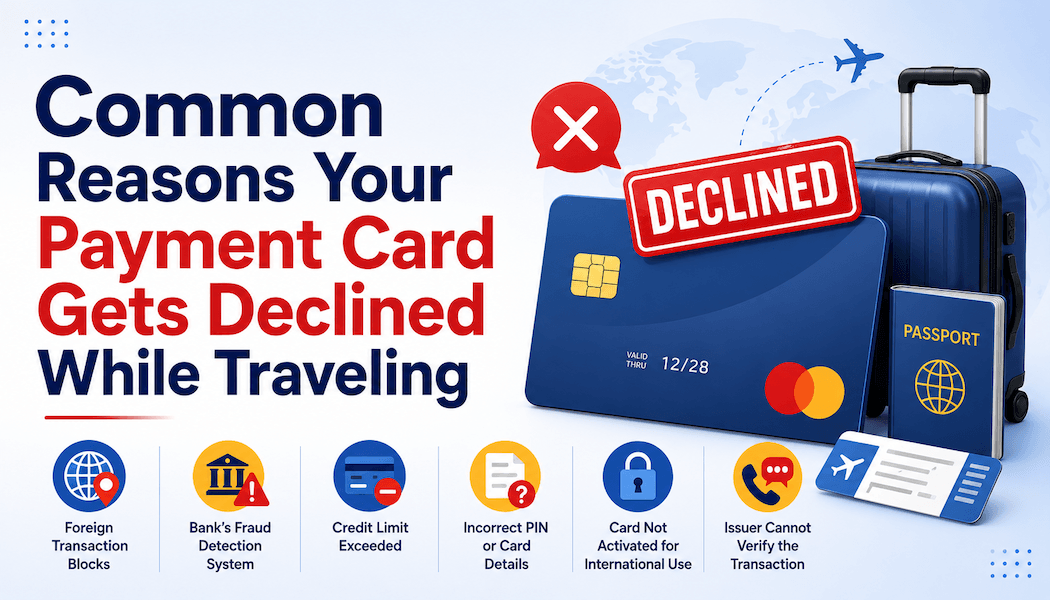
Common Reasons Your Payment Card Gets Declined While Traveling
If you've ever experienced your card declined at hotel, you know how frustrating it can be. Whether you're checking into your accommodation or starting a vacation, a declined payment can cause unnecessary stress and delays. Understanding why this happens can help you avoid similar situations in the future. You can learn more about the common causes and practical solutions by reading this guide.
Why Payment Cards Are Sometimes Declined
A payment card can be declined for many reasons, and not all of them indicate a problem with your bank account. Financial institutions constantly monitor transactions to protect customers from fraud, which means unusual spending patterns or large purchases may trigger automatic security checks.
Travel-related transactions are especially common targets for these security measures because they often involve higher amounts or purchases made in unfamiliar locations.
Hotels Often Place Temporary Holds
Many travelers don't realize that hotels usually place a temporary authorization hold on a card during check-in. This hold is separate from the room charge and is designed to cover possible additional expenses such as room service, parking, or damages.
If your available balance isn't high enough to cover both the reservation cost and the temporary hold, the transaction may be declined even if you have enough money for the room itself.
Car Rental Companies Have Similar Policies
Car rental companies also place authorization holds before handing over a vehicle. These holds are often larger than hotel deposits because they account for potential fuel charges, traffic fines, or vehicle damage.
If your spending limit or available balance is insufficient, your card may be rejected even though your account appears healthy.
Checking your available credit before arriving at the rental counter can prevent unexpected surprises.
Common Reasons for Payment Declines
Several factors can cause a payment card to be declined while traveling, including:
- Insufficient available balance
- Daily spending limits
- International transaction restrictions
- Expired payment card
- Incorrect PIN or security verification
- Temporary fraud protection blocks
- Damaged or malfunctioning card chip
- Merchant payment network issues
Identifying the exact reason usually requires contacting your card issuer.
Notify Your Bank Before Traveling
One of the easiest ways to reduce payment problems is informing your bank before leaving home. Many banks allow customers to submit travel notices through their mobile banking apps or online accounts.
When your bank knows you'll be making purchases in different cities or countries, unusual transactions are less likely to trigger fraud prevention systems.
Keep More Than One Payment Method
Experienced travelers rarely rely on a single payment card. Carrying both a credit card and a debit card provides valuable backup if one payment method fails.
You may also consider using a trusted digital wallet where accepted. Having multiple payment options reduces the chances of your trip being interrupted by a declined transaction.
It's also wise to carry a small amount of local currency for situations where electronic payments aren't available.
Check Your Card Before Departure
Before traveling, verify that your card:
- Has not expired.
- Has sufficient available funds or credit.
- Allows international transactions if traveling abroad.
- Is in good physical condition.
- Is linked to your current phone number for security verification.
A quick review can save considerable time and frustration later.
Monitor Your Account While Traveling
Most banks provide instant transaction notifications through their mobile apps. Enabling these alerts helps you quickly identify declined payments, suspicious activity, or unexpected authorization holds.
Regularly checking your account also allows you to respond immediately if your bank requests transaction verification.
Contact Your Bank if a Decline Occurs
If your payment is unexpectedly rejected, don't panic. Contact your bank or card issuer using the customer service number printed on the back of your card. In many cases, the issue can be resolved within minutes after confirming your identity or approving the transaction.
Final Thoughts
Payment card declines can happen to anyone, especially while traveling. Fortunately, they're often caused by temporary security measures, authorization holds, or account settings rather than serious financial problems. By planning ahead and understanding how payment verification works, you can enjoy a smoother and more stress-free travel experience.