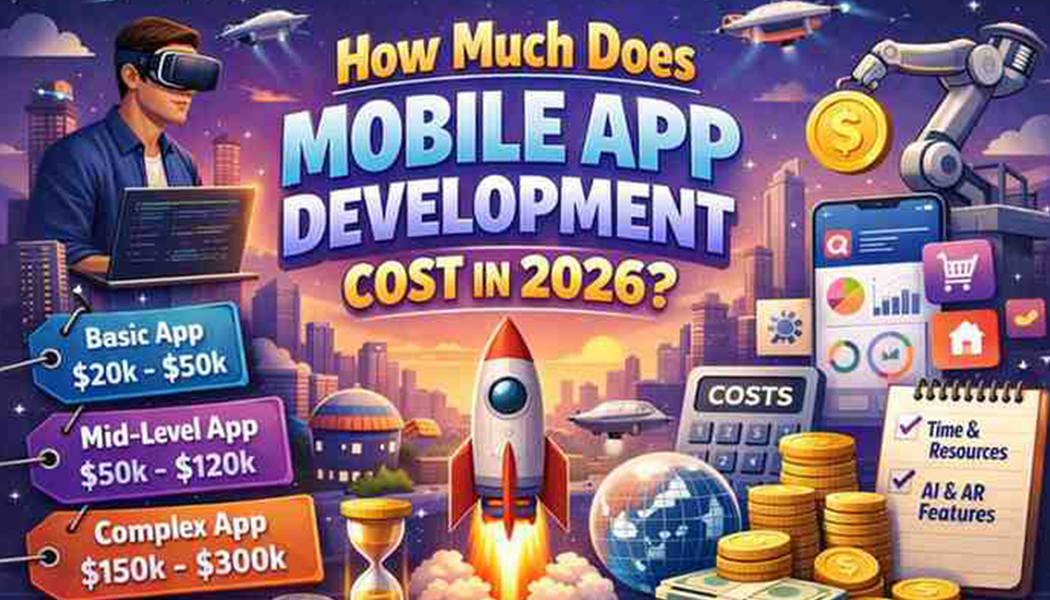
How Much Does Mobile App Development Cost in 2026?
In light of the rapidly evolving digital transformation, mobile apps are now a required investment for businesses of every type and size. Whether a start-up is releasing its first MVP or an enterprise is modernizing legacy systems, having a mobile app is no longer optional, it’s essential. But one of the most frequently asked and important questions companies have before they begin is: “How much does it cost to develop a mobile app in 2026?”
The answer isn’t simple. Development costs vary based on complexity, features, the chosen tech stack, target platform, development location, and post-launch maintenance. With the growing influence of AI, IoT, blockchain, and on-demand solutions, app development pricing in 2026 has changed dramatically.
This guide will break down the cost of app development in 2026, compare pricing by app type and features, and help you budget wisely whether you’re developing a simple app or a complex on-demand platform with a specialized ride sharing app development company.
Why Mobile App Development Costs Are Changing in 2026
App development has become more advanced than ever. Businesses now expect apps to be fast, secure, scalable, and highly personalized. Technologies like AI, machine learning, cloud computing, and real-time analytics are now the standard.
These advancements deliver great value but also raise development costs. Apps today require:
- Enhanced security and data compliance
- Superior UI/UX standards
- Cross-platform compatibility
- Third-party integrations
- AI-driven automation and personalization
So, app development costs in 2026 reflect both the increasing complexity of apps and users’ growing expectations.
Average Mobile App Development Cost in 2026
Although actual pricing varies, here’s a general estimate:
- Basic app: $15,000 – $30,000
- Medium-complexity app: $30,000 – $70,000
- High-complexity app: $70,000 – $150,000+
These numbers can rise for complex apps like fintech platforms, healthcare solutions, or on-demand systems built by a professional ride-sharing app development company.
Key Factors That Influence Cost
1. App Complexity and Features
More features mean higher costs. Examples include:
- User login systems
- Real-time chat and notifications
- Payment gateways
- GPS tracking
- AI-based recommendations
- Admin dashboards
A ride-hailing app, for example, requires real-time tracking, driver-user matching, fare calculations, and secure payments — all of which make it pricier than a basic informational app.
2. Platform Choice: iOS, Android, or Both
- Single platform: Lower cost
- Cross-platform (Flutter, React Native): More cost-effective reach
- Native for both: Higher cost but better performance
By 2026, many businesses prefer cross-platform development to save time and money while maintaining quality.
3. UI/UX Design Requirements
Custom UI/UX design adds cost but improves user engagement. Ride-sharing apps often feature interactive maps, real-time status updates, and sleek animations — all requiring expert design and development.
4. Development Team Location
- North America/Europe: $80 – $150/hour
- Eastern Europe: $40 – $70/hour
- India/Southeast Asia: $20 – $40/hour
Many companies cut costs by outsourcing to skilled offshore teams without compromising quality.
5. Backend Infrastructure and Integrations
Modern apps depend heavily on robust backend systems. Costs increase when apps require:
- Cloud infrastructure
- Real-time syncing
- Payment integrations
- APIs and analytics tools
For on-demand apps, backend development is one of the biggest cost drivers.
Cost by App Type
- E-commerce apps: $30,000 – $80,000
- On-demand/ride-sharing apps: $60,000 – $150,000+
- Healthcare apps: $40,000 – $100,000
- Fintech apps: $50,000 – $120,000
Hidden Costs to Plan For
Don’t overlook long-term expenses like:
- Maintenance and updates
- Cloud hosting
- Third-party tools
- Security upgrades
- Marketing and ASO
Ongoing costs usually account for 15–25% of the initial development cost each year.
How AI Impacts Costs
AI adds to upfront development costs but improves automation, personalization, and efficiency. Examples include:
- AI chatbots
- Predictive analytics
- Fraud detection
- Smart recommendations
For ride-hailing platforms, AI optimizes routes, pricing, and driver allocation — making it a worthwhile investment.
Reducing Costs Without Losing Quality
- Start with an MVP
- Choose cross-platform development
- Outsource strategically
- Build scalable architecture
- Avoid unnecessary features
A reliable partner helps you balance cost, performance, and quality.
Choosing the Right Development Partner
Pick a team that:
- Has proven industry experience
- Offers transparent pricing
- Provides post-launch support
- Understands your business goals
For on-demand apps, partnering with a specialized ride-sharing app development company ensures long-term scalability and security.
Final Thoughts
So, how much does mobile app development cost in 2026? It depends on your app’s complexity, features, technology, and development partner. While costs can seem high, a well-built app generates long-term value, enhances efficiency, and creates new revenue opportunities.
By understanding the key factors behind app costs and choosing the right strategy, businesses can make smart, future-ready investments, whether they’re building a simple business app or a large-scale on-demand platform.