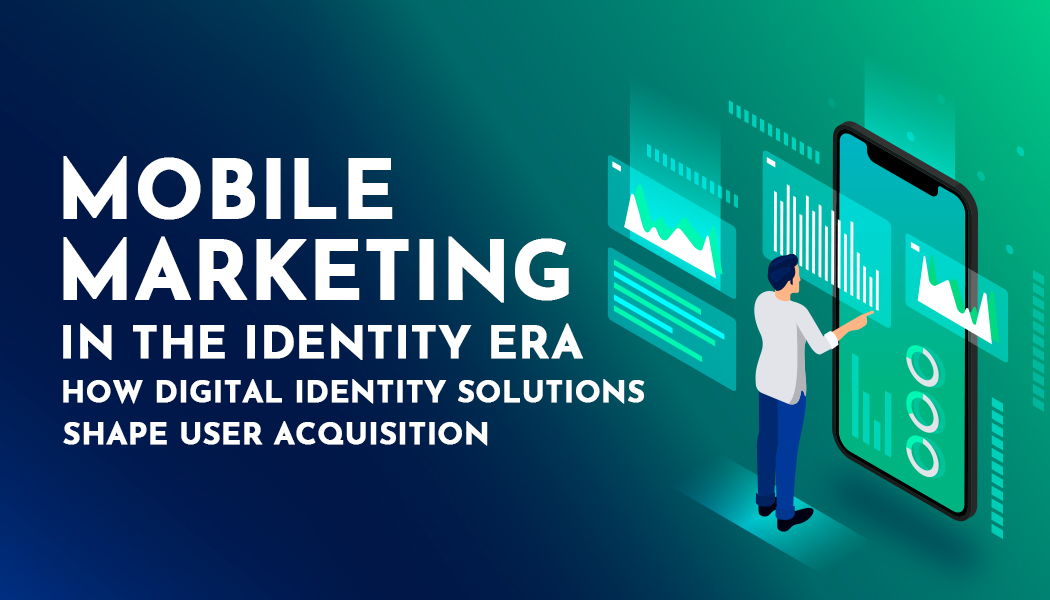
Mobile Marketing in the Identity Era: How Digital Identity Solutions Shape User Acquisition
Marketing strategies have been deeply influenced by the digital landscape and among them, mobile marketing is the one that has grown the fastest. One of the main reasons for such a change is the increasing use of digital identity solutions that allow companies to improve the acquisition of new users and make the relations with customers easier. These tools are transforming the way brands interact with their customers by guaranteeing them to be more personalized and secure experiences. This article discusses how digital identity solutions pave the way for mobile marketing and what effects they have on the future of user acquisition.
The Rise of Mobile Marketing
Mobile marketing has changed significantly and is now a popular way of capturing the attention of consumers. There are over 6.9 billion smartphone users worldwide, making mobile devices the main tools for accessing the internet, buying goods and interacting with others. Recent data show that more than 70% of internet traffic is generated by mobile devices. Due to this shift, businesses have had no option but to adopt mobile-first approaches. The term mobile marketing covers different tactics that involve SMS promotions, mobile apps, location-based services and in-app advertising. To be able to attract and retain users, businesses must deliver to them personalized and seamless experiences which happen to be exactly what digital identity solutions can provide.
Digital Identity Solutions: An Overview
Digital identity is the data that distinguishes a user in the online world and may include such information as email addresses, usernames, biometric data, and even behavioral patterns. Digital identity solutions are the means by which these identities are verified, managed, and secured, along with being compliant with regulations. The digital identity solution market has expanded significantly in a short period of time, which is mainly attributed to the necessity of securing sensitive data and the need to provide better customer experiences. With the coming of data privacy regulations such as GDPR and CCPA, these solutions assist businesses in meeting the requirements while allowing users to have more control over their data. Through the use of digital identity solutions, businesses will be able to carry out mobile marketing that is more targeted and relevant, which, in turn, will result in better user acquisition and retention.
How Digital Identity Solutions Impact User Acquisition
1. Personalized Marketing at Scale
Marketing can't be more effective without personalization. Most of the time, typical ads use big demographic groups and as a result, they come up with content that is not very personal. By using digital identity solutions, companies are able to collect detailed data about the preferences and the lifestyle of their customers and therefore, they can have the chance to address customers with personalized marketing communication and offer them suitable products. To illustrate, an application on a smartphone may provide special deals that suit a customer's previous purchases, where their surfing pattern, making it more probable that new customers will be turned into existing ones.
2. Improved Security and Trust
Trust is a driving factor for the gaining of new users since people are becoming more sensitive in this matter. To address these concerns, digital identity solutions have been put in place as a safe method of user identification, thus reducing fraud and illegal access. Additionally, biometrics like fingerprint and facial recognition technology can ensure the security of users to a greater extent. Consequently, if the users are convinced that their data is not at risk, they will be more prone to using the applications, revealing their data, and buying, which is exactly what leads to the increase in user acquisition rates.
3. Seamless User Onboarding
An app onboarding experience is quite possibly the most vital moment in a mobile marketing strategy. A frictionless onboarding process will result in users who are more likely to stay with the app, hence the retention rate will increase. To make it even more user-friendly, users should be able to create accounts or log in employing digital identity solutions such as SSO (single sign-on) and social login options without the need to remember multiple passwords. As a result, this seamless experience makes it more probable that newly registered users will continue to a certain level and thus become loyal customers.
4. Cross-Platform Integration
With users accessing services on different devices and platforms, keeping user identity the same is very important for a good experience without any interruptions. The use of digital identity solutions has enabled companies to follow the behavior of users through different points of contact, whether on mobile devices, desktops, or other digital interfaces. When companies keep one digital identity, they are able to give the same experience to the users, make targeted marketing communication, and improve user acquisition in many different channels. Such a cross-platform integration is a way to connect online and offline interactions and, thus, users can be kept engaged without a break in engagement regardless of the device they use.
The Role of Digital Identity Solutions in Addressing Data Privacy Concerns
One of the major difficulties that a mobile marketer is confronted with is how to effectively personalize their marketing while at the same time observing data privacy. The reality is that consumers have become increasingly aware of the manner in which their personal data is handled, and as a result, they only accept brands that prove to them that they are transparent and that they respect their privacy. Digital identity solutions enable enterprises to address these issues by the way they allow users to set their data preferences and give consent. Empowering users with the control of their information and at the same time, guaranteeing adherence to data privacy regulations, companies can therefore earn the trust and loyalty of their customers, which is the main thing needed for a successful user acquisition strategy.
The Future of Digital Identity in Mobile Marketing
The market for digital identity solutions is projected to keep on growing as companies try to improve their m-commerce strategies and satisfy the requirements of privacy-aware consumers. Next to it, the industry is also expecting a whole range of new identity verification tech to emerge the next-gen biometrics, identity management powered by AI, and decentralized identity platforms. Companies will be in a position to utilize more accurate and efficient means to attract, retain and engage consumers as a result of these technological advancements. The rise of privacy-sensitive legal frameworks will constitute a growing challenge to which digital identity solutions will be the most appropriate means for businesses to address while still offering a customer-centric approach.
According to Pristine Market Insights, the crossroads of mobile marketing and digital identity solutions is a major user acquisition breakthrough. Using these solutions, companies can heighten personalization, facilitate security, simplify onboarding, and even tackle the issue of data privacy, which in turn gives them better customer engagement and higher conversion rates. With the expansion of the digital identity solutions market, their influence on the evolution of mobile marketing will become more significant. In a rapidly changing digital environment, enterprises embracing these revolutionary instruments will be in a stronger position to attract, acquire, and retain users in a time when data security, personalization, and trust are of utmost importance.