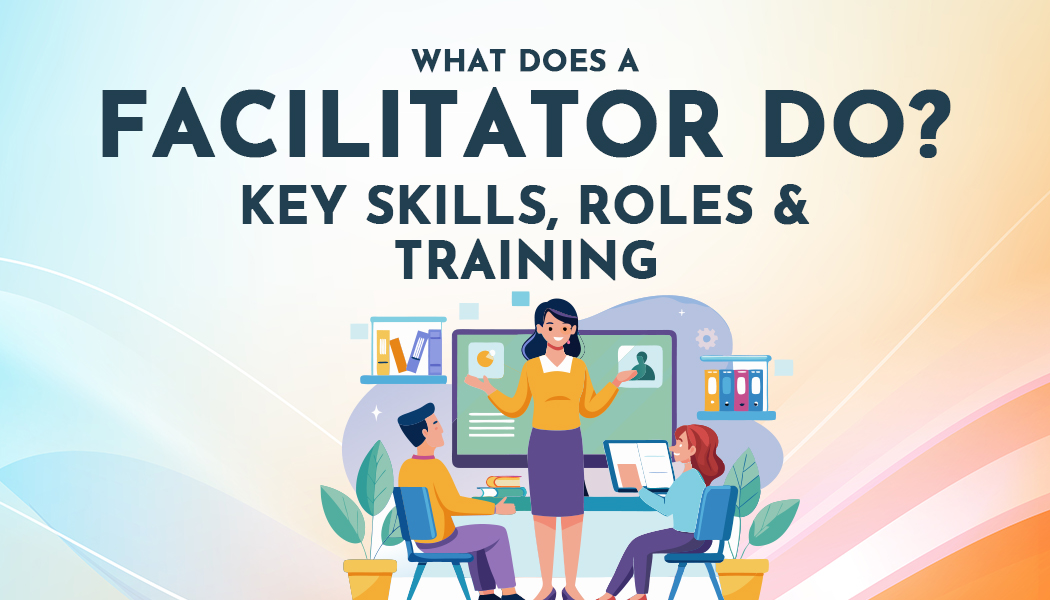
What Does a Facilitator Do? Key Skills, Roles & Training
What does a facilitator do in today's collaborative workplace? They guide groups toward achieving specific goals through structured discussions and interactive activities. Facilitators ensure productive meetings and training sessions across various industries, including business, healthcare, and education. They create inclusive environments that foster collaboration and effective teamwork.
Facilitators help teams make decisions and solve complex problems by applying conflict resolution techniques and active listening skills. Unlike content experts, facilitators focus on managing group processes rather than providing subject matter expertise. They enable participants to contribute meaningfully and reach consensus through guided discussions and structured activities.
Let's explore the key skills facilitators need, their various roles, and training paths available for success in this dynamic career field.
What is a Facilitator Job?
What is a facilitator job involves guiding groups to achieve specific objectives through structured discussions and collaborative activities. Facilitators lead meetings, workshops, and training sessions across diverse industries. They focus on managing processes and group dynamics rather than delivering content. This approach ensures all participants contribute effectively toward productive outcomes. Core facilitator responsibilities:
- Plan Sessions: Design comprehensive agendas for workshops and meetings that align with group objectives and desired outcomes.
- Guide Discussions: Lead groups to stay focused and productive while encouraging meaningful participation from all team members.
- Encourage Participation: Ensure every voice is heard and valued, creating inclusive environments for diverse perspectives and contributions.
- Resolve Conflicts: Address disagreements constructively and help groups work through challenges to reach consensus and solutions.
- Use Tools: Effectively utilize various platforms including whiteboards, digital collaboration software, and virtual meeting technologies.
- Summarize Outcomes: Clearly document decisions, action items, and next steps to ensure accountability and successful follow-through.
- Manage Time: Keep sessions on schedule while maintaining engagement and allowing adequate time for thorough discussion.
- Foster Inclusivity: Create safe, collaborative spaces where all participants feel comfortable contributing their ideas and expertise.
- Evaluate Results: Assess session effectiveness and gather participant feedback to improve future facilitation efforts and outcomes.
- Adapt Approach: Adjust facilitation style and techniques based on group needs, dynamics, and emerging situations during sessions.
What is a facilitator's job? Unlike trainers who focus on teaching content, facilitators concentrate on guiding group processes and interactions. Facilitator positions may be full-time roles, freelance opportunities, or responsibilities within HR departments.
Facilitation Skills for Trainers - Must-Have Competencies
Facilitation skills for trainers enable professionals to engage learners effectively and achieve better training outcomes. These competencies help trainers lead interactive, engaging sessions that ensure productive learning experiences across industries. Strong facilitation significantly increases learner participation and knowledge retention while creating collaborative learning environments. Facilitation skills for trainers:
- Active Listening: Carefully hear and respond to learner needs, concerns, and contributions to create responsive learning experiences.
- Clear Communication: Explain complex concepts simply and effectively, ensuring all participants understand key information and instructions clearly.
- Engagement Techniques: Use interactive methods and activities that encourage active participation and maintain learner interest throughout sessions.
- Conflict Resolution: Handle disagreements and tensions calmly and constructively, maintaining positive learning atmospheres for all participants.
- Time Management: Keep training sessions on schedule while allowing adequate time for discussion and practical skill development.
- Adjust facilitation approach based on group dynamics, learning needs, and unexpected situations that arise during training.
- Effective Questioning: Use thought-provoking questions to spark meaningful discussions and deepen participant understanding of key concepts.
- Feedback Skills: Provide constructive, actionable insights that help learners improve their skills and knowledge application effectively.
- Tool Proficiency: Skillfully use learning platforms, virtual meeting tools, and Learning Management Systems for effective content delivery.
- Emotional Intelligence: Build trust and rapport with participants while managing group emotions and interpersonal dynamics successfully.
These facilitation skills for trainers significantly enhance training impact and effectiveness across diverse learning environments. Active listening improves engagement by approximately 30%, ensuring learners feel heard and valued. Clear communication makes complex topics accessible to audiences with varying backgrounds and experience levels.
Facilitator training programs help professionals develop these essential skills through structured learning and practical application. Adaptability allows trainers to customize sessions for diverse groups, whether working with IT teams, sales professionals, or specialized audiences. Skilled questioning techniques deepen understanding and encourage critical thinking among participants.
Trainers can develop these competencies through professional programs like ATD's Facilitation Skills Certificate or by practicing techniques in workshop settings. Volunteering to lead team sessions and seeking feedback builds practical experience and confidence.
Qualities of a Good Facilitator
Qualities of a good facilitator determine their ability to lead successful groups, workshops, and collaborative discussions effectively. Facilitators work across diverse fields including education, healthcare, and business. These essential traits ensure productive teamwork and goal achievement while creating inclusive, engaging environments for all participants. Key facilitator qualities:
- Empathy: Understands and values diverse group perspectives, creating environments where all participants feel heard and genuinely respected.
- Confidence: Leads groups with assurance and authority while maintaining approachable, collaborative relationships with all team members.
- Flexibility: Adapts quickly to changing group dynamics, unexpected situations, and evolving discussion needs during collaborative sessions.
- Neutrality: Maintains objectivity and impartiality during discussions, allowing all viewpoints to be expressed without personal bias.
- Organization: Plans and structures sessions efficiently with clear agendas, timelines, and objectives that guide productive group outcomes.
- Listening Skills: Actively engages with participant input, demonstrating genuine interest in contributions, concerns, and diverse perspectives.
- Problem-Solving: Quickly identifies and addresses issues that arise, maintaining session momentum and keeping groups focused on objectives.
- Engagement: Uses interactive techniques and activities that keep participants actively involved and motivated throughout collaborative sessions.
- Cultural Awareness: Respects and accommodates diverse backgrounds, perspectives, and communication styles within multicultural group settings.
Research demonstrates that skilled facilitators can increase team productivity by approximately 25% through effective group management techniques. Empathy builds trust and ensures participants feel valued and included in meaningful discussions. Confidence helps maintain session control and keeps groups focused on achieving intended objectives.
Flexibility enables facilitators to handle unexpected situations and adapt to changing group needs during dynamic sessions. Neutrality allows for open, unbiased discussions where all perspectives can be shared freely without judgment. Strong organizational skills ensure sessions run smoothly and achieve intended outcomes within scheduled timeframes.
Training for Facilitators (Courses & Certifications)
Training for facilitators equips professionals with essential skills to guide groups effectively through structured learning programs and certifications. Courses cover facilitation techniques, conflict resolution, and group dynamics. These programs serve trainers, managers, and consultants across business, education, and organizational development fields.
- Certified Professional Facilitator (CPF): IAF's program for mastering group facilitation.
- ATD Facilitation Skills Certificate: Focuses on engaging training delivery.
- Voltage Control Facilitation Certification: Builds skills and a portfolio.
- Facilitator Masterclass (Facilitator School): Six-week online course for meeting facilitation.
- Certified Agile Facilitator (CAF): Scrum Alliance's agile-focused certification.
- LUMA Facilitator Certification: Emphasizes design thinking methods.
- The Effective Facilitator (Leadership Strategies): Covers 100+ facilitation techniques.
- Georgetown Executive Certificate: Prepares leaders for strategic facilitation and leadership.
- INIFAC Certified Master Facilitator (CMF): Advanced certification for professionals.
- Coursera Facilitation Courses: Offers flexible, online skill-building.
Professional training for facilitators significantly enhances group collaboration and organizational productivity across diverse workplace settings. The CPF certification typically costs $1,000–$2,000 and validates core competencies while providing global professional recognition. ATD's certificate program costs approximately $1,500 and develops both virtual and in-person facilitation skills.
Training Facilitation Skills – Practical Drills
Training facilitation skills through practical exercises enables trainers to lead productive sessions while managing group dynamics effectively. Hands-on drills build competence in handling diverse participants and challenging situations. These skills particularly benefit trainers working across business, healthcare, and educational settings where effective group leadership is essential. Essential training facilitation skills:
- Role-Play Scenarios: Practice handling difficult participants.
- Agenda Design: Create a 30-minute workshop plan.
- Questioning Practice: Ask open-ended questions to spark discussion.
- Time Management Drill: Conduct a 10-minute timed session.
- Conflict Resolution: Simulate resolving group disagreements.
- Active Listening Exercise: Summarize participant input accurately.
- Virtual Facilitation: Lead a session using Zoom or Miro.
- Feedback Delivery: Provide constructive feedback to peers.
- Group Activity Design: Develop a 15-minute team exercise.
- Adaptability Drill: Adjust a session plan during an exercise.
These practical exercises sharpen training facilitation skills for real-world training applications across diverse professional environments. Role-playing scenarios prepare trainers to handle disengaged or challenging participants with confidence and professionalism. Structured agenda design ensures well-organized, productive sessions that achieve intended learning outcomes consistently.
Virtual facilitation practice develops crucial skills for remote team training using digital collaboration tools and online platforms. Trainers can practice these skills in professional workshops, ATD local chapter meetups, and peer learning groups for continuous improvement.