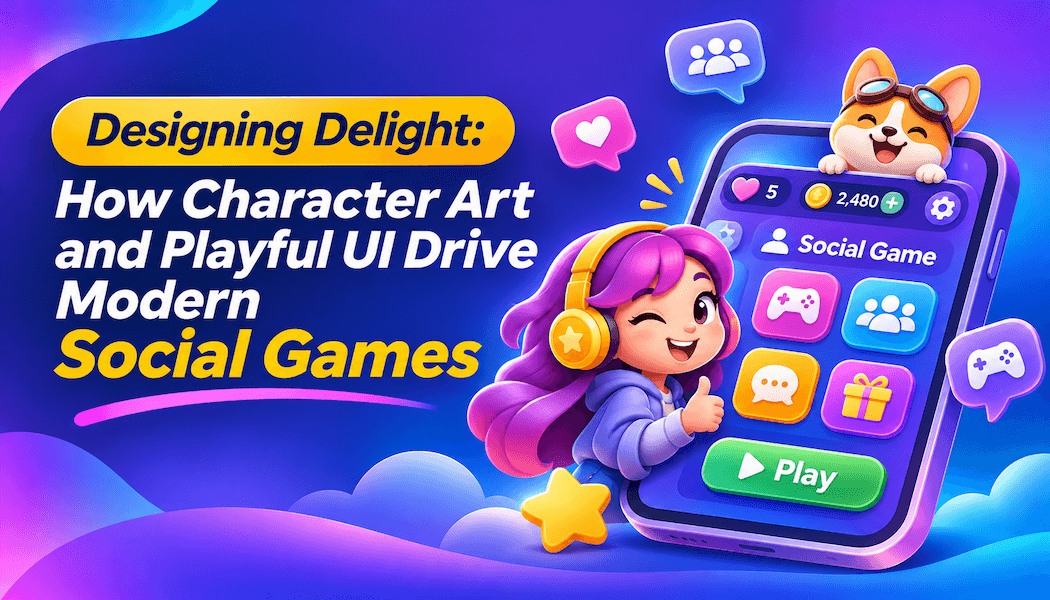
Designing Delight: How Character Art and Playful UI Drive Modern Social Games
Great digital products do more than solve functional problems; they spark immediate emotional curiosity. Across mobile apps, interactive websites, and casual games, visual craft has become the decisive factor that separates forgettable interfaces from vibrant communities. Today, lightweight social games running directly inside mobile messengers are proving that expressive character design, clean visual hierarchy, and tactile micro-interactions can captivate millions of users without requiring heavy hardware or complicated tutorials.
Character-Driven Storytelling in Compact Screens
Designing for mobile-first social ecosystems demands strict visual discipline. With limited screen real estate and brief user sessions, every icon, color palette, and character silhouette must communicate clearly at a single glance.
In Duck My Duck, a social gaming ecosystem built on The Open Network (TON) that has attracted over six million registered players, visual personality sits at the core of the experience. Instead of burying newcomers under dense menus or text-heavy instructions, the interface centers on expressive, collectible duck characters with distinct visual traits, themed outfits, and clear evolution stages. Raising, feeding, hatching, and merging characters feels intuitive because visual cues guide every step.
Balancing Web3 Mechanics with Effortless UI
Historically, decentralized applications struggled with intimidating interfaces that alienated everyday audiences. Complex wallet setups, technical jargon, and cluttered dashboards created high visual friction. Modern token gaming platforms are reversing that trend by hiding technical complexity behind friendly, familiar design patterns.
Inside Duck My Duck, utility mechanics powered by the $DMD token integrate naturally into everyday gameplay loops, seasonal events, and cooperative challenges. Users focus on playful progression and visual customization while underlying digital ownership works quietly in the background. When the interface prioritizes clarity and delight, sophisticated technology becomes accessible to everyone.
Micro-Interactions and Social Momentum
Memorable game and app design relies heavily on responsive feedback. Subtle animations when an egg hatches, crisp progress indicators during daily care routines, and celebratory visual badges turn simple taps into rewarding moments.
Equally important is how design encourages social connection. By living inside Telegram, Duck My Duck turns community chats into living extensions of the game interface, where players share rare character combinations, coordinate cooperative pairings, and celebrate seasonal milestones together. Good design does not isolate the user; it gives people visual artifacts they are excited to show their friends.
Looking Ahead to Cross-Platform Polish
As social ecosystems expand from instant messengers into standalone iOS and Android applications, maintaining visual consistency across devices becomes essential. Players expect their digital collections, character animations, and intuitive navigation to feel seamless whether they open a quick session on a phone or explore deeper features on a larger screen.
Ultimately, standout digital design always comes back to human emotion: craft memorable characters, respect the user's attention, and make every interaction feel genuinely fun.