Designing for Creative Freedom: How Unfiltered AI Storytelling Web Applications Have Gone Beyond Just A Simple Chatbox
Introduction
Over the last 3 years there have been two waves of AI Generative Web Applications. The first wave was focused on productivity in the workplace. These simple one-column chatbot applications provided users with tools to debug code, create emails, and summarise spreadsheet data. Today, the second wave of AI Generative Web Applications is taking off like wildfire as we see interactive web and mobile applications built for creative fiction, romance stories, and browser-based storytelling games.
As thousands of independent authors, interactive fiction players, and roleplaying fans started using AI tools in their web browsers to create stories, they quickly realised a problem. General chatbots were never designed to write compelling fiction, and as platforms have become much stricter with content filtering, authors have been locked out of creating authentic adult-themed stories, passionate romance, and intricate emotional conflicts. This has led to a huge rise in dedicated, unfiltered storytelling web applications.
Why General Chatbots Are Not Designed To Help With Creative Storytelling
From a user experience point of view, it is frustrating to write an engaging story inside a general corporate chatbot. Because those apps are built around enterprise brand safety, creative users run into three constant roadblocks.
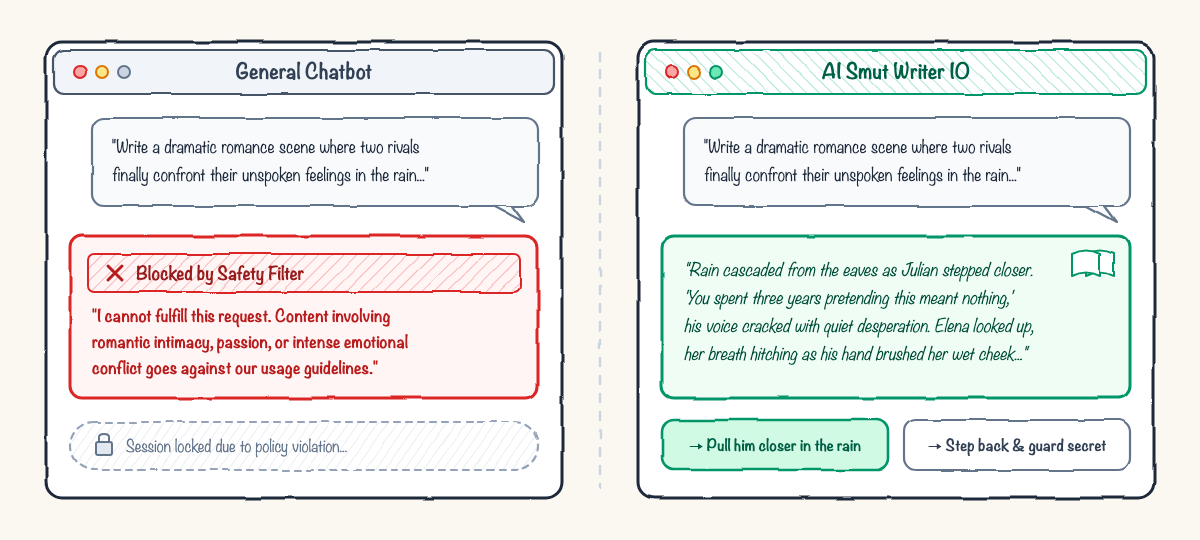
Strict Corporate Filters: Creating compelling stories naturally involves conflict, passion, and grey moral areas. Romance stories explore intimacy and desire, while dark fantasy and thrillers rely on suspense and excitement. General chatbots cannot tell the difference between fictional drama and real-world policy violations, so the moment a scene gets passionate or tense with conflict, the chatbot brings up a pop-up warning informing you that it cannot help with the request.
No Memory Of Context / Personas: When using a general chatbot, you lose characterisation very quickly. After just a few messages, a sharp-tongued villain or a complicated romantic lead turns back into an overly polite office assistant.
Not Very Flexible: Having a single scrollable text box works fine for answering trivia questions, but storytelling needs more flexibility. Writers and players need a web application with multiple interactive options for branching storylines, scene resets, and dedicated creative modes.
How Unfiltered Storytelling Web Applications Work
Instead of fighting against strict office chatbots, writers and interactive players are switching to web applications built specifically for unrestricted romance and adult fiction. Browser-based web apps such as AI Smut Writer give adult creators an unfiltered workspace to write passionate romance scenes, explore mature storylines, and play interactive storytelling games directly in their desktop or mobile browser—with zero moralising pop-ups getting in the way.
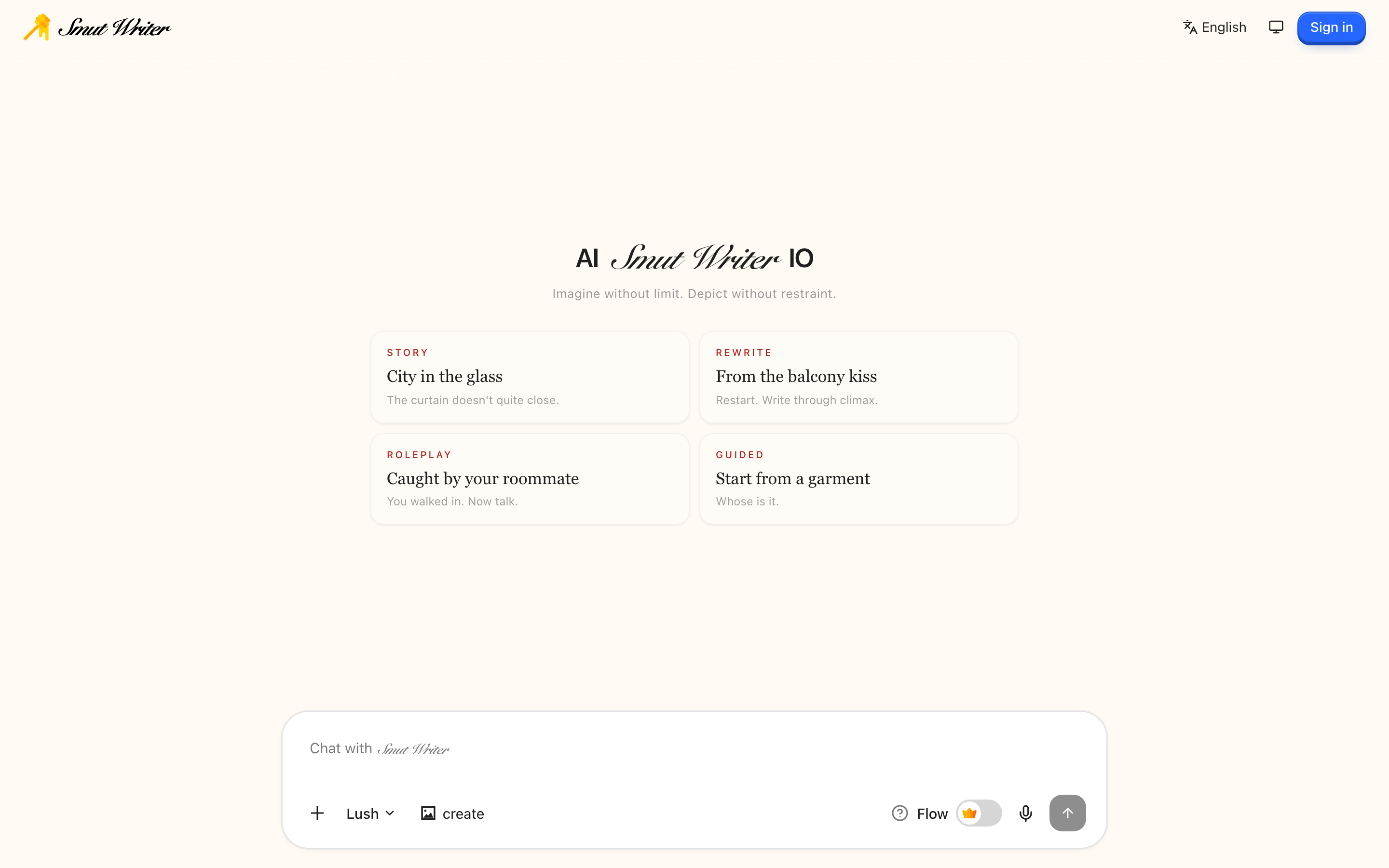
Modern storytelling web applications organise this experience around three core modes:
1. Normal Chat Mode (Unfiltered & No Memory Loss)
Sometimes you just want to chat freely or brainstorm a romantic or dramatic scene with no fixed plot attached. In normal chat mode, users can talk and test story ideas with zero judgement. Keeping that context alive is the part a generic script struggles with, while an AI chatbot template arrives with character memory and membership billing already wired in. The web app generates free-flowing conversation while keeping context consistent throughout the session, meaning characters remember who they are, their relationship dynamics, and subtle shifts in emotion.
2. Branching Stories (Choose Your Own Adventure Web Game)
One of the most exciting parts of modern web app design is bringing back classic Choose Your Own Adventure (CYOA) games in the browser. Using the Branching Story Mode, users play an interactive narrative web game. At the end of each scene, the app presents options to choose what happens next. Every decision changes the direction of the plot, unlocking different romantic outcomes, plot twists, and replayable storylines.
3. 1-1 Roleplay (Immersive Roleplay)
When a user wants to step directly inside a scene, 1-1 Roleplay mode turns the browser into an interactive stage. Users can create bespoke characters with their own personality, backstory, and scenario hooks—such as late-night romantic tension or enemies-to-lovers banter. Because the web application is built for adult fiction, characters maintain genuine chemistry and realistic dialogue.
How Different Users Use The Modes
Depending on what kind of creator or player you are, these three modes fit naturally into different desktop and mobile browser workflows.
Romance & Adult Fiction Authors: Using normal chat and roleplay sandbox mode, authors can push past writer's block, test how two leads interact in conversation, and draft intimate or high-tension scenes without censorship interruptions.
Interactive Fiction & Web Game Players: Casual gamers can launch the CYOA branching mode on their phone or laptop for a browser-based story game where every choice matters.
Character Designers & Roleplayers: Roleplayers can build detailed character personas and see how they react under emotional pressure in 1-1 scenes.
|
Product Type |
General Chatbots |
Dedicated Storytelling Web Applications |
|
Content & Romance Policies |
Strict filters. Blocks mature or intimate fiction. |
No filters. Full creative freedom for adult romance & fiction. |
|
Web App Interface |
Single linear Q&A box. |
Multiple modes (Normal Chat, CYOA Web Game, 1-1 Roleplay). |
|
Interactive Game Features |
Static text replies only. |
Dynamic reader choices that change the story outcome. |
|
Character & Context Memory |
Quickly loses character voice. |
Consistent context and persona memory across scenes. |
Key Points For Future Creative Web Applications
As more specialised AI web applications emerge, the growth of unfiltered storytelling platforms highlights three practical lessons for modern web and mobile app design.
Different Modes For Different Moods: People open creative apps with different goals, so separating normal chat mode, CYOA branching stories, and 1-1 roleplay into clear visual cards removes the fear of a blank page.
Easy Access On Browsers: Building a fast, responsive web application means users can jump straight into their stories on a desktop monitor or mobile browser, with no heavy app download required.
Treat Adults Like Responsible Creators: The best UX decision a creative platform can make is treating adult users like responsible adults. When a web application protects user privacy and removes unnecessary barriers to adult fiction, the interface fades into the background, leaving creators with an open space to bring their stories to life.