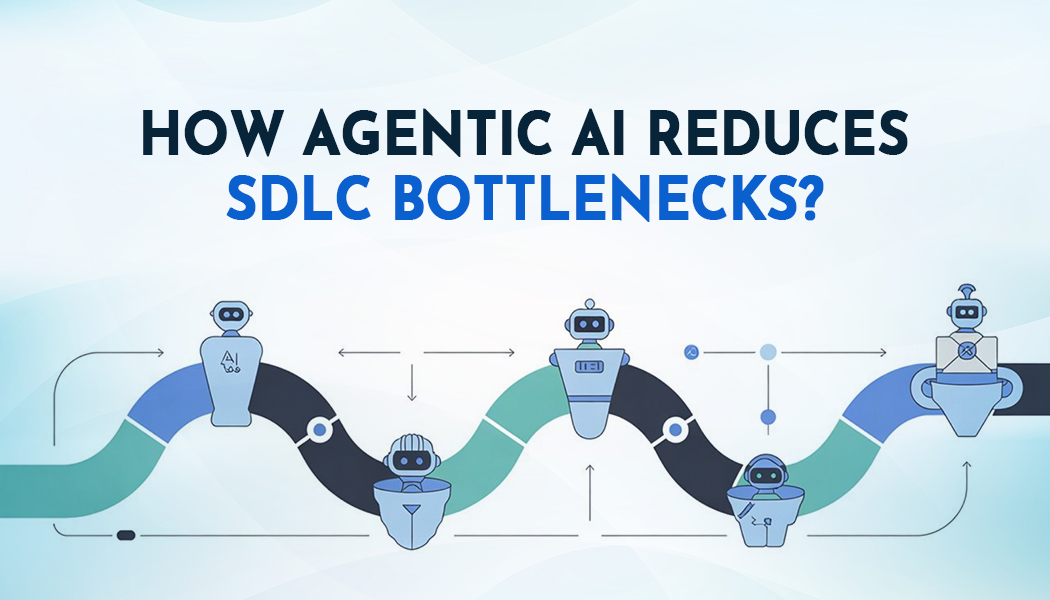
How Agentic AI Reduces SDLC Bottlenecks?
Introduction
Software Development Lifecycle (SDLC) is the backbone of every enterprise technology stack. However, despite the automation offered by DevOps, the CI/CD pipelines and agile frameworks, organizations still experience the same bottlenecks: delays in planning, test duplication, conflicts in the integration process, and friction during deployment.
Today, Agentic AI in SDLC is becoming the next key innovation of software engineering. Not only does it automate, but it also thinks, learns, and evolves to optimize all the stages of the lifecycle. Enterprises seek sustainable acceleration, and AI-driven software development services are transforming the way software is designed, tested, and deployed. For experts' insight on AI-driven SDLC, check this comprehensive content piece.
What Is Agentic AI and Why It Matters in SDLC
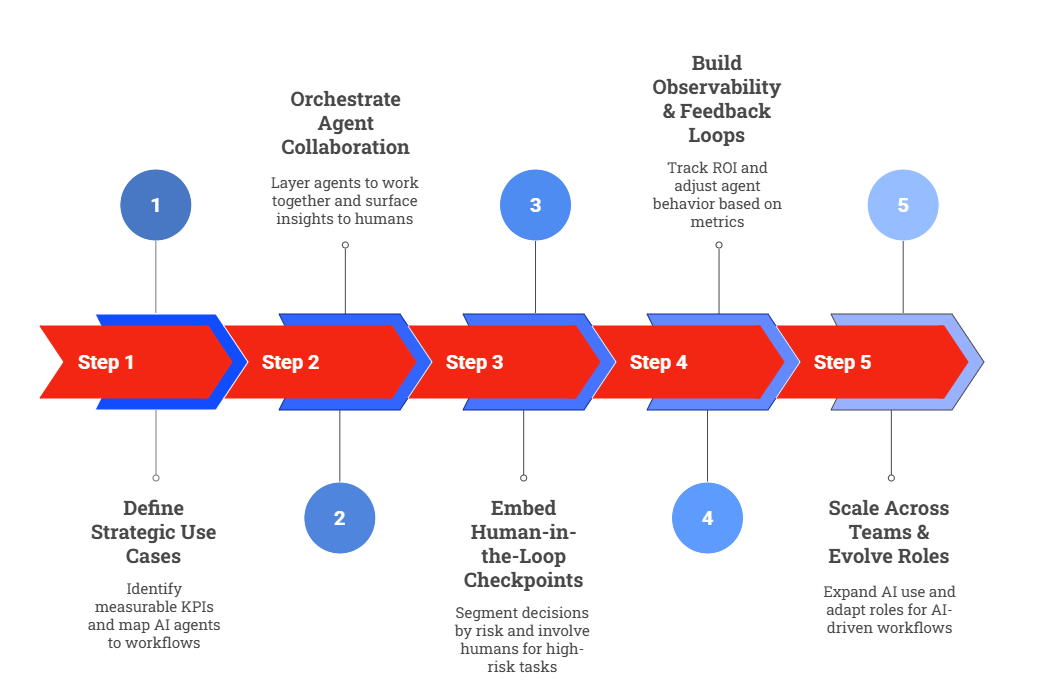
Agentic AI is a new paradigm of Artificial Intelligence that thinks and acts within a complex system. These agents are independent, and they collaborate at various phases of SDLC, unlike the traditional AI tools, which need people to supervise them.
These agents are capable of:
- Process requirements based on natural language documentation.
- Write, read, and code optimally on your own.
- Create and test test cases in real time.
- Measure performance after deploying and self-healing pipelines.
This is the next stage of AI in the software development lifecycle, a major transition from automation to adaptive orchestration. According to the McKinsey report, the development time for standard coding tasks can be reduced by 35–45%, while refactoring efforts saw a 20–30% time savings.
Understanding the Bottlenecks in Modern SDLC
Despite Agile and DevOps advancements, SDLC often comes across systemic inefficiencies:
1. Planning Inefficiencies
In large development programs, documentation lags behind requirements. Lack of alignment between business analysts, developers, and the stakeholders in their expectations can confuse user stories and cause scope revisions. This ambiguity makes the commencement of coding a delaying matter.
2. Development Delays
Developers invest a lot of time doing repetitive work, working on dependencies, and switching environments or tools. Disintegration problems, incompatibility in the use of codes, and lack of cohesive working processes slow down progress and affect the delivery schedules.
3. Testing Slowdowns
The processes of testing that use manual or semi-automated methods are subject to human error, and they are also not scalable. The time taken in regression testing is excessive when done after each release, which in most cases leads to release bottlenecks. Lack of coverage of predictive tests also leads to errors in the cycle.
4. Deployment Challenges
Despite having CI/CD, pipeline friction usually occurs during deployment because of an environment mismatch, configuration drift, or sluggish recommendations. Limited visibility of environments, the use of rollbacks, and manual interventions also slow down release velocity.
5. Operational Friction
Reactive monitoring is essential to the post-deployment operations. When problems are detected, it is too late because the user has been affected, and this takes a long time to solve the problem. The absence of unified observability and feedback loops makes it impossible to continuously improve the SDLC.
How Agentic AI Reduces SDLC Bottlenecks
Agentic AI is transforming SDLC by automating repetitive tasks, streamlining complex workflows, and providing intelligent recommendations for smooth development. By 2028, 33% of enterprise software applications will include Agentic AI, up from less than 1% in 2024, enabling 15% of day-to-day work decisions to be made autonomously. [Source: Gartner ]
1. Smarter Requirement Analysis
The product requirements are interpreted by Agentic AI agents using natural language processing (NLP) to transform them into actionable user stories. They can identify the ambiguities, dependencies, and even match tasks with team capacity.
Impact: Fewer change iterations and less planning time.
2. AI-Assisted Code Review and Development
IDES like VS Code or IntelliJ have Agentic AIs that help developers generate real-time code, provide refactorings, and follow best practices. They are independent co-developers and learn from previous projects to enhance the quality and structure of the code.
Impact: Decreased rework and enhanced maintainability.
3. SDLC Quality Assurance Powered by AI
One of the phases that is time-consuming is testing. Agentic AI creates test cases automatically, either with functional specifications or based on recent code commits. It is capable of establishing probable places of failure, capable of running regression tests concurrently, and the results can be authenticated.
Impact: Accelerated, more dependable QA and reduced production flaws.
4. Intelligent Deployment Management
Deployment agents perform constant environment analysis and usage of resources. They independently make decisions on the most appropriate deployment windows, rollout, and rollback in case of anomalies.
Impact: Less time is spent on downtime and more release stability.
5. Constant Optimization and Self-Healing Pipelines
Once deployed, Agentic AI for improving SDLC efficiency ensures SDLC pipelines will self-adapt to observed behaviors. Agents oversee the performance of the CI/CD, detect integration failure, and preemptively correct the situation without human interference.
Impact: Operation resilience and proactive issue management.
Benefits of Agentic AI in Software Development
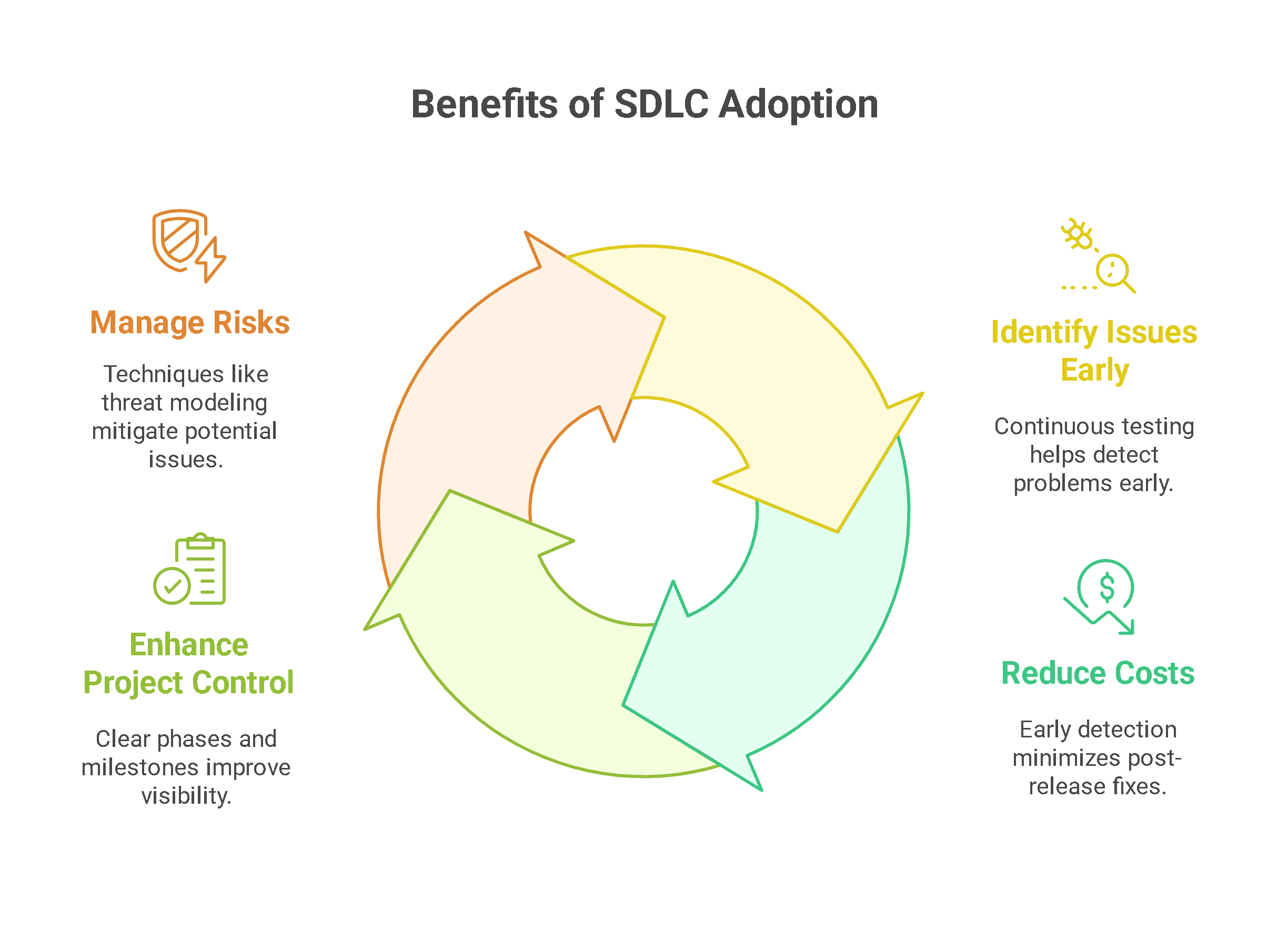
The adoption of the Agentic AI for SDLC optimization is more than mere automation. It brings in adaptive intelligence, which uses data, developer behavior, and operational feedback to improve each phase of the development pipeline. The advantages that will lead to enterprise adoption are as follows:
1. Strategic Business Agility
Strategically, AI Agent Development Services for improving SDLC allow the company to respond to the diverse business needs. Organizations can gain enterprise agility by making predictable delivery and providing feedback continuously.
2. Better Quality and Consistency of Codes
AI for code generators identifies security vulnerabilities, smells, and design flaws early during an autonomous review. Such systems enforce uniform coding rules between distributed work groups, lowering rework and after-release defects.
3. AI-Assisted and Predictive Quality Assurance
Traditional QA is reactive. The AI-driven quality assurance in SDLC makes it a proactive and ongoing process. The agentic AI is a dynamically generated test case, predicts probable failure points, and automatically runs tests with each commit.
4. Cost Efficiency and Intelligent Automation
Enterprises can reduce the use of human resources by delegating monotonous work to AI agents. The development teams can focus on the innovation, and the AI will manage the routine operations.
5. Continuous Optimization and Self-Repair Pipelines.
Intelligent AI monitors SDLC in real time. It measures the performance of the build and the environmental health with resource use. When problems arise, it may instigate self-healing activity, roll back deployments, or reallocate resources automatically.
6. Accelerated Release Cycles
The agentic AI reduces human intervention in the planning, coding, testing, and deployment. It minimizes the time taken to complete an iteration by automating the process of requirement analysis, code reviews, and regression testing.
Wrapping Up
As organizations undergo modernization of their software ecosystems, Agentic AI inSecks not by adding more Automation Scripts or layers of DevOps, but by building self-learning, self-managing ecosystems of Intelligent Agents that operate in collaboration throughout development, testing, and deployment.
Organizations take advantage of AI consulting services for aligning AI capabilities directly to business objectives, identifying opportunities for automation throughout the life cycle, and building governance frameworks.
To accelerate the adoption of this Agentic AI application, many enterprises are now hiring AI Agent developers from experienced development firms. These experts design multi-agent workflows that integrate seamlessly with CI/CD tools, security systems, and cloud environments.