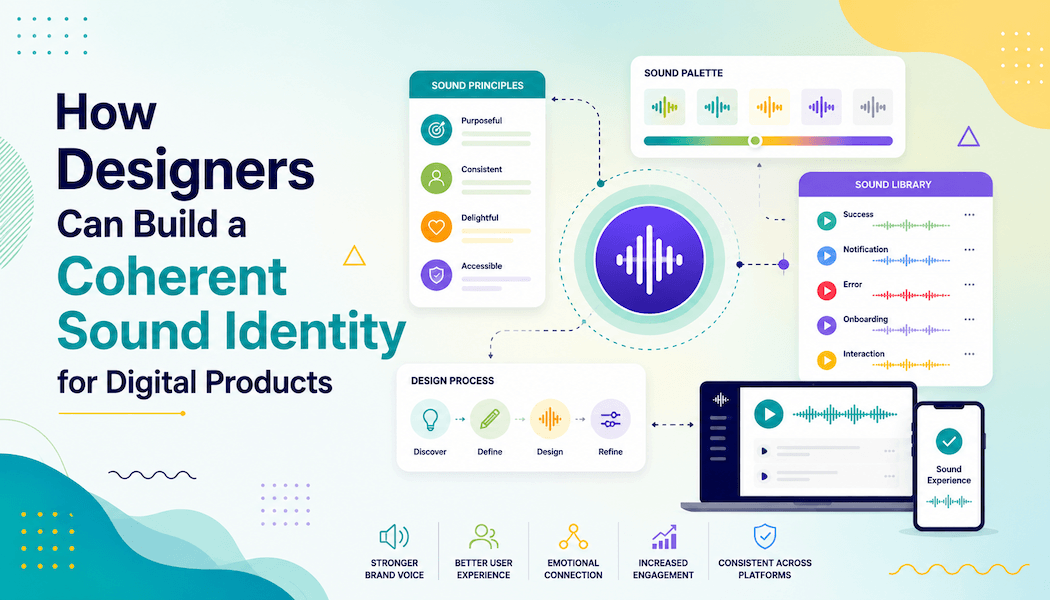
How Designers Can Build a Coherent Sound Identity for Digital Products
Digital products are carefully art-directed through color, type, motion, and language, yet sound is often chosen at the end from a generic library. The result may be polished in isolation but disconnected from the interface, campaign, and emotional character the design team worked to establish.
Sound becomes more useful when it is treated as a small design system rather than a single track. An AI Music Agent can help teams explore musical directions through natural-language briefs, but coherence still depends on human decisions about role, mood, repetition, contrast, and context.
Treat Sound as Interface Material
The first question is not “What genre represents our brand?” It is “Where does sound help the experience?” A product may need music for launch films and social demos but silence inside the application. Another may benefit from a short welcome cue, subtle completion feedback, and a longer piece for events. Mapping those moments prevents one song from being stretched across unrelated tasks.
Sound also occupies time, so it behaves differently from a logo or color token. It can lead attention, delay an interaction, increase tension, or compete with speech. Designers should review it against the same criteria used for motion: purpose, duration, hierarchy, responsiveness, and the user’s ability to control it. A beautiful cue that interrupts concentration is still a poor interface choice.
Define the System Before the Tracks
A lightweight sound identity can be documented on one page. The objective is not to dictate every note, but to give future creators enough boundaries to make related decisions.
1. Assign a Role to Each Moment
List the touchpoints where sound may appear, then name the job at each one. A launch film may need narrative momentum, a feature demo may need space for explanation, and a success state may need immediate confirmation. If two moments have the same job, consider whether they can share a motif or texture instead of creating unrelated cues.
2. Map Emotional Territories
Choose a small number of emotional qualities that fit the product, then describe what each means in practice. “Optimistic” could mean an upward melodic movement and open arrangement, while “focused” might mean a steady pulse with fewer competing elements. Pair each desired territory with a nearby quality to avoid, such as energetic but not frantic or premium but not distant.
3. Specify Recognizable Ingredients
Identity often comes from a few repeatable decisions: a soft percussive texture, a particular balance of acoustic and electronic sound, a short rhythmic signature, or a preference for spacious arrangements. These ingredients are more adaptable than a rigid genre. They can survive when a ten-second teaser becomes a two-minute case-study soundtrack.
4. Draw Clear Boundaries
State what the system should not do. A productivity tool might avoid notification-like tones in background music. A healthcare service may reject suspenseful rises. A product built around calm focus may limit abrupt drops and dense percussion. Boundaries make reviews faster because the team can identify a mismatch without arguing only from personal taste.
Prototype the Identity Through Musical Conversation
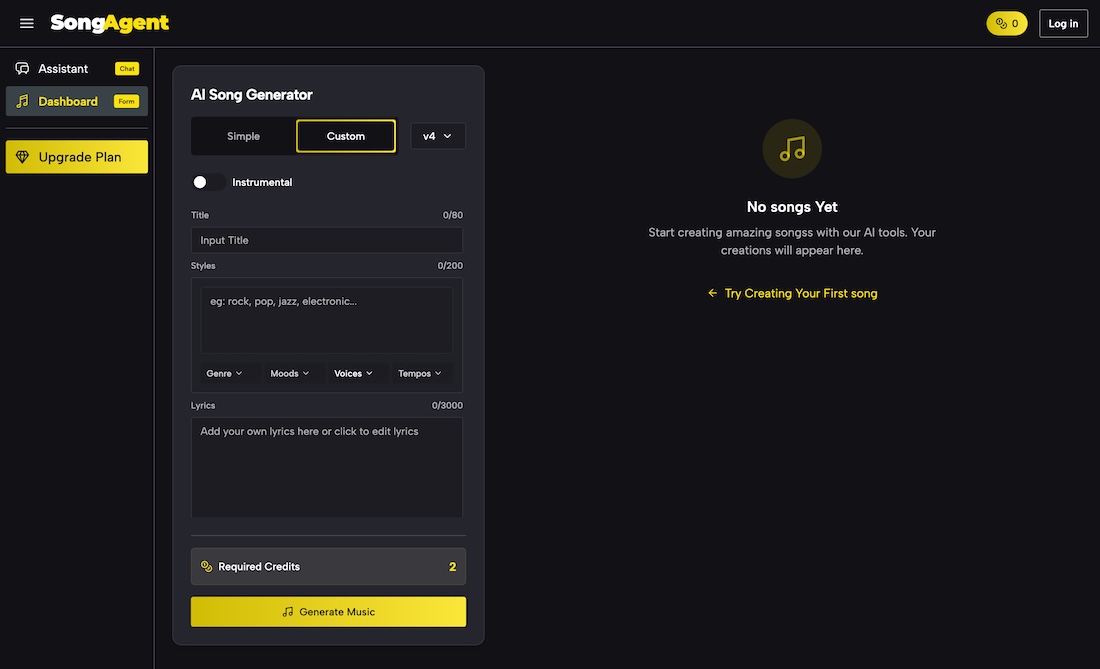
Once the system is defined, create a real test brief rather than asking for a “brand song.” Include the touchpoint, audience, emotional movement, voice-over needs, duration, recurring ingredient, and key boundary. For example: a restrained cue for a 60-second onboarding film, curious at first and quietly confident at the reveal, with room for narration and no dramatic drop. SongAgent supports a workflow in which the user describes the idea, reviews a musical blueprint, generates the result, and requests refinements. The blueprint can expose proposed structure, instrumentation, key, tempo, and style before generation. For a design team, that is a reviewable artifact: people can discuss whether the plan expresses the design system before reacting to a finished track as a matter of taste.
Use the first output as a prototype. Place it under the actual motion design and narration, then collect feedback with timestamps and design language. “The texture at 0:18 competes with the product reveal” is actionable. “It does not feel innovative” is not. A conversational AI Song Agent is most effective when each request preserves the approved direction and changes one relationship, such as density beneath speech or energy at a transition. Create two deliberately different explorations early, not ten minor variations. One could emphasize warm acoustic texture; the other could use restrained electronic rhythm while keeping the same emotional map. Comparing clear directions helps the team decide what belongs to the identity. Endless near-duplicates encourage selection by novelty rather than principle.
Present Sound Inside the Case Study
Portfolio presentation should show how the sound solves a design problem. Begin with the touchpoint and constraint, then explain the brief, the system decisions, and the revision that improved the result. Let viewers hear a short cue in context with the interface or film instead of presenting only an isolated audio player. Document the relationship between artifacts. A small diagram can connect the core ingredients to the launch cue, product demo, event loop, and interface feedback. This reveals a system rather than a collection of files. If a cue was adapted, show which elements remained stable and which changed to fit a new duration or hierarchy.
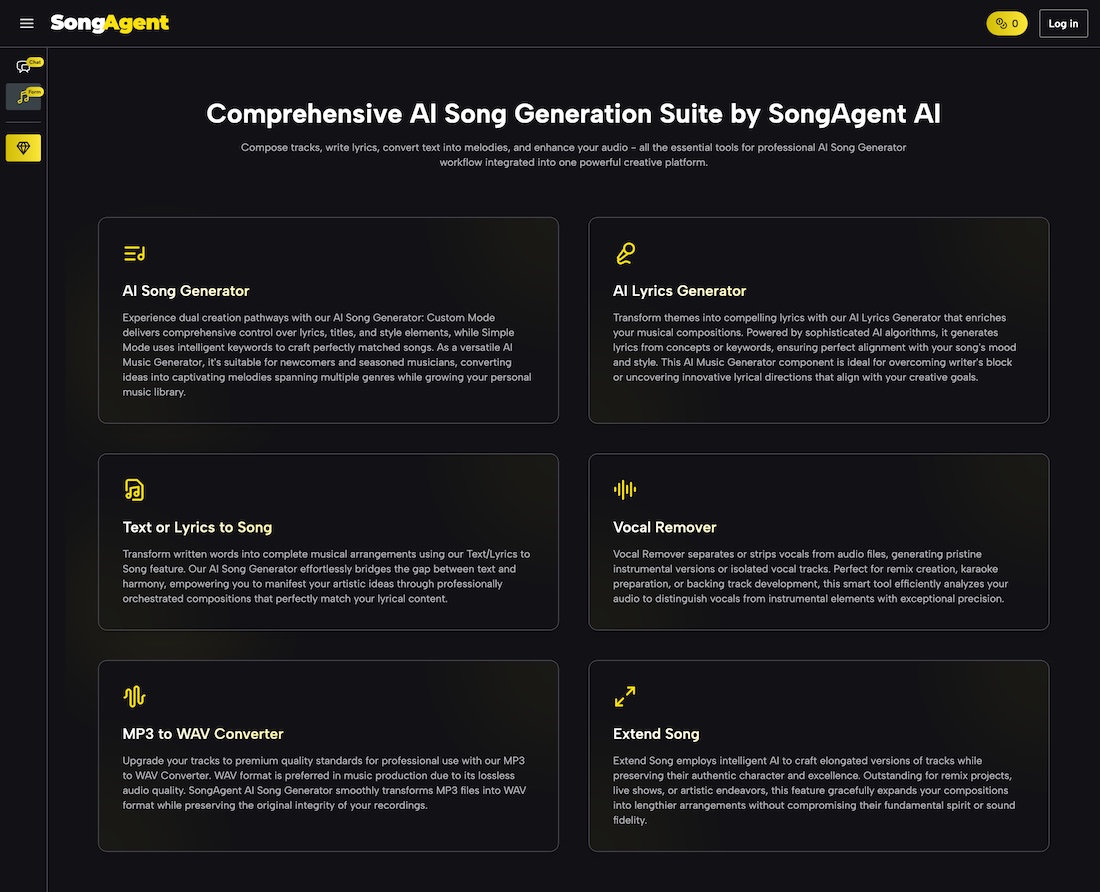
Keep playback optional and clearly labeled. Provide captions or a transcript when speech is involved, and describe the musical purpose in text so the case study remains understandable without sound. A portfolio visitor may be in a public place, using assistive technology, or simply scanning quickly. Good presentation respects all three situations. Production records matter too. Store the approved brief, version history, masters, exports, and applicable license information with the project. SongAgent lists MP3 and WAV downloads plus separation features on its plans, but teams should verify that the plan they use covers the intended commercial context. A beautiful case study should not conceal uncertain handoff details.
Consistency Matters More Than Sonic Novelty
A coherent sound identity comes from roles, emotional territories, repeatable ingredients, and boundaries that can guide many touchpoints. Conversational generation can accelerate prototypes and focused revisions, but it does not replace the design judgment that connects sound to the user’s experience.
The long-term test is simple: can another designer create the next cue without starting from zero? When the answer is yes, sound has moved beyond decoration. It has become a flexible part of the product language, recognizable across contexts and quiet enough to serve the experience rather than compete with it.