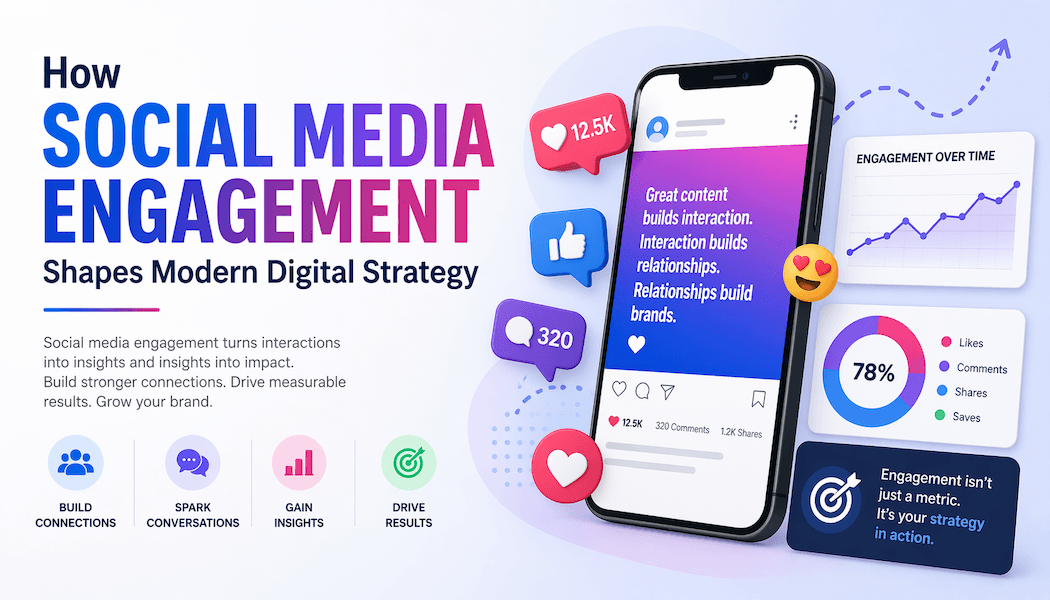
How Social Media Engagement Shapes Modern Digital Strategy
Introduction: The New Currency of the Digital World
In today’s digital ecosystem, social media engagement has become one of the strongest indicators of online success. Businesses, influencers, startups, and even large organizations depend heavily on audience interaction to grow their online presence. Likes, shares, comments, and reactions are no longer simple numbers; they represent trust, visibility, and brand awareness.
As websites and mobile platforms evolve, social media engagement plays a major role in shaping modern digital strategy. Companies are learning that building relationships online is more valuable than simply promoting products.
Understanding Social Media Engagement Beyond Likes
Many people assume that likes alone define success on social media. However, engagement goes far beyond basic reactions. True engagement includes user interaction, meaningful discussions, shares, saves, and repeat visits.
From a digital strategy perspective, engagement helps platforms understand which content provides value to users. Algorithms prioritize posts that encourage conversation and interaction. This means businesses must focus on creating content that connects emotionally with audiences rather than posting promotional material only.
Modern digital strategy emphasizes quality communication instead of quantity posting.
Why Engagement Matters for Websites and Online Platforms
Social media engagement directly impacts website performance. When users interact with social content, they are more likely to visit linked websites or download mobile applications.
- Website traffic
- Brand credibility
- Search engine visibility
- Customer trust
Businesses integrating social media into web development strategies often see stronger user retention. A well-designed website connected with active social channels creates a seamless user journey from discovery to conversion.
The Role of Digital Strategy in Modern Business Growth
Digital strategy combines marketing, technology, and user experience into one unified approach. A strong brand identity ensures consistency across these elements and helps audiences instantly recognize and connect with a business. Social media acts as the communication bridge between brands and audiences.
Successful companies analyze engagement data to understand customer behavior. They monitor which posts perform best, what audiences respond to, and how users interact with digital platforms.
This data-driven approach allows brands to improve product offerings, adjust marketing campaigns, and design better digital experiences. Engagement is therefore not just a marketing metric—it is a business intelligence tool.
You talk when you cease to be at peace with your thoughts. We accept the love we think we deserve. Life is to be lived, not controlled.
UI/UX Design and Social Media Influence
User Interface (UI) and User Experience (UX) design are strongly influenced by social media behavior. Platforms study how users scroll, react, and interact with content to design more intuitive digital environments.
- Simple navigation systems
- Fast loading interfaces
- Mobile-first design
- Interactive features
When websites adopt familiar social media interaction patterns, users feel comfortable and stay longer. Good design encourages engagement, while poor design quickly pushes users away.
Mobile Applications and the Engagement Economy
The rise of mobile applications has transformed how people consume digital content. Most social media interaction now happens on smartphones, making mobile optimization essential.
Apps that encourage interaction through notifications, personalized feeds, and community features achieve higher user retention. Digital strategists focus on creating engaging mobile experiences rather than static applications.
Mobile engagement is now considered a key performance indicator for startups and technology companies worldwide.
Authenticity as the Core of Digital Success
Modern audiences easily recognize artificial promotion. Authentic communication has become essential for building long-term engagement.
Brands that share real stories, useful knowledge, and transparent messaging attract loyal communities. Instead of chasing numbers, successful businesses focus on genuine audience relationships.
Authenticity builds trust, and trust leads to sustainable growth in the digital environment.
Balancing Organic Growth and Strategic Promotion
While organic engagement is valuable, strategic promotion also plays an important role. Digital campaigns supported by targeted advertising can help brands reach new audiences.
However, promotion works best when combined with engaging content. Advertising alone cannot replace meaningful interaction. The most effective digital strategies balance organic community building with smart promotional planning.
Future Trends in Social Media and Digital Strategy
The future of digital strategy will revolve around personalization, artificial intelligence, and user-centered design. Platforms will increasingly reward meaningful engagement rather than passive consumption.
- Community building
- Interactive content
- Cross-platform integration
- Ethical digital marketing
Organizations that prioritize engagement-driven strategy will remain competitive in the evolving digital landscape.
Conclusion: Engagement as the Foundation of Digital Strategy
Social media engagement has become the foundation of modern digital success. It influences website performance, mobile applications, UI/UX design, and overall business growth.
Rather than viewing likes as simple metrics, businesses must understand engagement as a reflection of audience connection. Companies that invest in authentic interaction, user experience, and data-driven strategy will continue to thrive in the digital age.