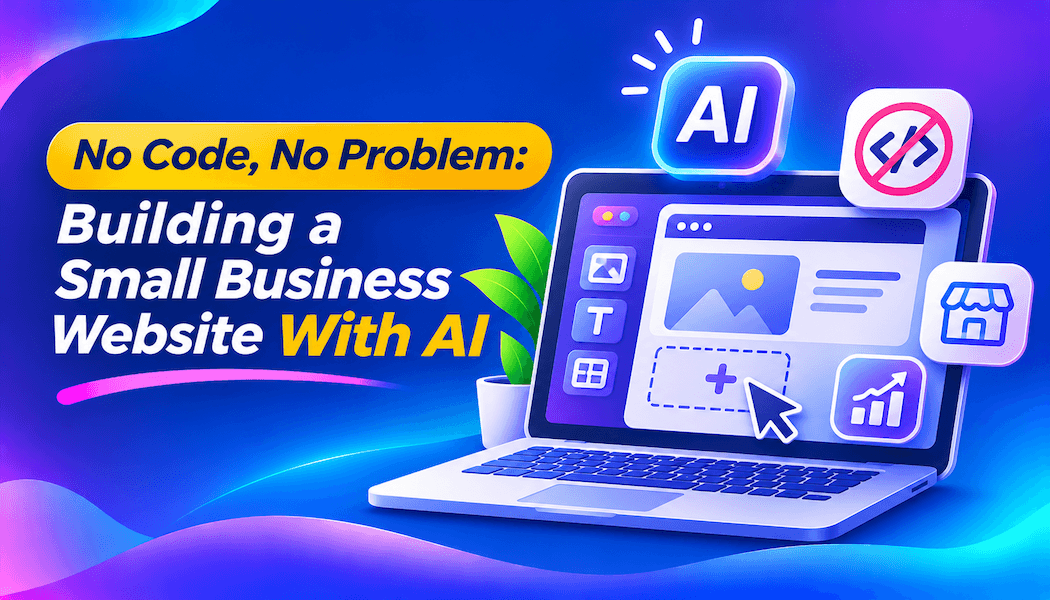
No Code, No Problem: Building a Small Business Website With AI
Owen runs a mobile dog grooming van in Cardiff. He's brilliant with nervous terriers, patient with muddy spaniels and unflappable when a Labrador decides that bath time is, in fact, a swimming lesson. What Owen had never managed was a website. For three years, his business lived on a Facebook page and a stack of slightly soggy business cards. Customers kept asking for a proper site where they could check prices and areas covered. Owen kept meaning to sort it. Every time he looked at a website builder, the jargon sent him straight back to the van.
Why Building a Website Used to Feel So Hard
Not long ago, a website meant either paying a developer or learning a fair bit of technical know-how. Coding, hosting, domain settings and design choices all had to be juggled. Even drag-and-drop builders, which made things easier, still left plenty of decisions about layouts, fonts, colours and page structure. For a sole trader with a full diary, that was a lot to take on in the evenings.
The result was predictable. Plenty of small businesses, from cafés and hairdressers to tutors and tradespeople, simply went without, or settled for a social media page that was hard to find in a search.
What No-Code and AI Tools Change
No-code tools removed the need to write any code at all. Pages could be built by choosing blocks, adding text and dropping in images. AI has taken that a step further. Instead of starting with a blank template, a person can describe the business in plain language and let the software suggest a structure, draft the wording and propose a layout.
That shift matters most at the very start, which is often the hardest part. Staring at an empty page is daunting. Reacting to a draft is much easier. Owen found this out quickly. Describing his business as "a friendly mobile dog grooming service covering Cardiff and the Vale" turned out to be far simpler than deciding what a homepage ought to contain.
Planning Before Building
Even with clever tools, a little planning goes a long way. The clearest small business websites usually answer a handful of simple questions. What does the business do? Who is it for? Where does it operate? How much does it cost, roughly? And how can someone get in touch or book?
Owen jotted his answers on the back of an appointment card while waiting for a poodle to dry. Services: full groom, bath and tidy, nail trims. Area: Cardiff and nearby towns. Booking: phone or WhatsApp. That short list became the backbone of the whole site.
Using an AI Website Builder
With his notes ready, Owen tried an ai website builder from Rewind.ai, a platform that offers free AI tools which can be used without signing up. That last detail mattered to him more than he expected. He had no interest in creating yet another account just to see whether the idea worked, and being able to start straight away removed the usual reluctance.
The appeal of tools like this lies in how quickly they turn a description into something visible. A short prompt about the business becomes a draft site with sections, headings and starter text. From there, the job shifts from building to editing, which suits busy people far better.
Owen's first draft was surprisingly decent. It had a welcome section, a list of services and a contact area. It also described his business as "premium canine aesthetics", which made him laugh out loud in the van. He changed it to "dog grooming that comes to the door".
Making the Site Sound Like the Business
AI can produce a solid first draft, but the personality has to come from the owner. Generic wording is easy to spot, and customers respond far better to a site that sounds like a real person.
A few edits make a big difference. Replacing vague phrases with specific details helps, such as naming the areas covered or the types of dogs most often groomed. Adding a short "about" section with a little personal background builds trust. Real photos, rather than stock images, show what the business actually looks like. Owen added a picture of his van, a grinning cockapoo fresh from a trim and a short paragraph about why he left office work to spend his days with dogs.
Accuracy matters too. Prices, opening hours and contact details need checking carefully, since AI tools can fill gaps with guesses. A website promising Sunday appointments that don't exist is a quick way to annoy customers.
Keeping It Simple and Useful
Small business websites don't need to be complicated. Clear navigation, readable text and an obvious way to get in touch usually matter more than fancy animations. A visitor on a phone, perhaps standing in a park with a very dirty dog, wants the answer to one question in a few seconds: can this person help, and how do they book?
Mobile layout deserves particular attention, since many people browse on their phones. Checking the site on a small screen, tapping every button and reading every section helps catch problems before customers do. Owen asked his sister to test it on her phone. She found two typos and a broken link within five minutes, which she seemed to enjoy far more than necessary.
Growing Over Time
A first website is a starting point, not a finished project. Over time, it can be improved with customer reviews, a gallery of recent work, seasonal offers or a simple booking form. Updating it regularly keeps information accurate and gives returning visitors a reason to look again.
Owen now adds a "dog of the month" photo each month. It takes him five minutes and has become one of the most popular things he does. Customers have started asking whether their dog might be next, and one particularly competitive owner of a dachshund has asked three times.
Final Thoughts
Building a website no longer requires coding skills or a big budget. No-code tools and AI website builders can turn a simple description into a working draft, leaving owners free to focus on adding real details, personality and accurate information. A little planning and careful editing go a long way. Owen's website went live on a rainy Thursday evening, and his first online enquiry arrived the next morning from a woman with two very muddy springer spaniels.