The Future of Beauty Apps: How UX Is Shaping Personalized Skincare Experiences
Beauty technology has come a long way from catalogs and e-commerce. Today, these mobile applications and online platforms are reshaping the way that people look for skin care products, learn about skin, and discover beauty treatments from professionals. The modern beauty industry has incorporated user experience (UX) into its operations as users get used to managing various aspects of their lives with their smartphones.
The best beauty apps aren't just about showing off products. They design bespoke digital experiences that facilitate users to identify and choose from options that are relevant to them, to keep track of their activities and to inform their decisions. With this transition, designers and developers are now finding opportunities to marry personalization, artificial intelligence, visual interfaces and intuitive navigation.
Personalization at the Center of Beauty Apps
Each and every person has different skin. Skin care requirements can be affected by factors like age, lifestyle, environmental conditions, skin type, and previous treatments. As a result, a uniform digital experience might not offer much benefit.
Onboarding questionnaires are becoming a popular feature in beauty apps for gathering pertinent details from users. Rather than showing hundreds of products, an app may have questions regarding skin concerns, sensitivity, products currently used, or personal goals. This can then be used by the user interface to provide a more appropriate experience.
This helps to alleviate cognitive overload from a UX standpoint. The application doesn't need to browse through all the products in order to find something of interest since information can be prioritized to be more relevant to the user.
AI and Smart Skin Analysis
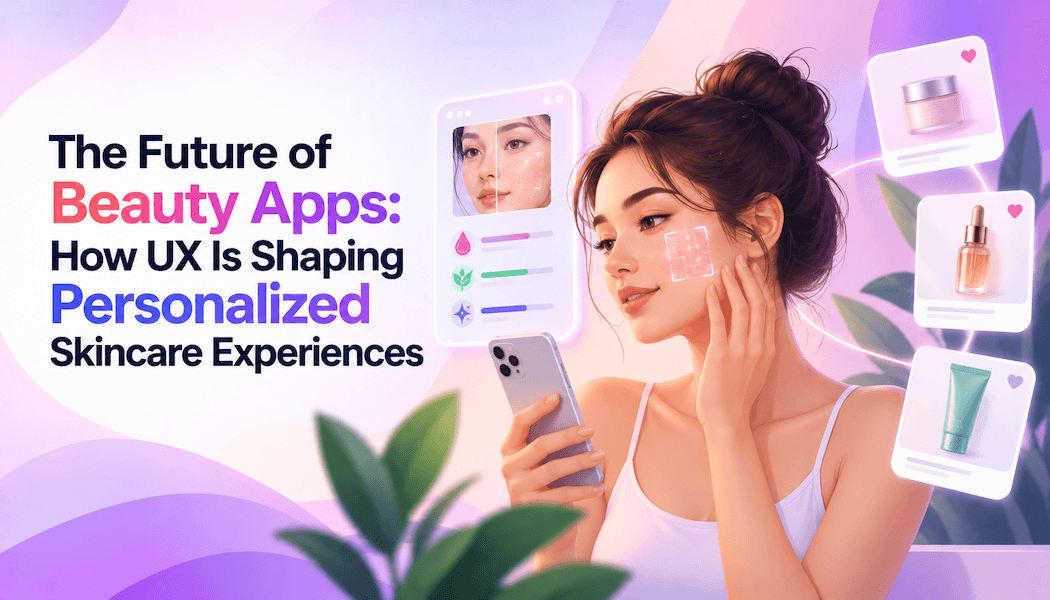
Beauty applications are also incorporating AI into their functions. Some platforms utilize image recognition and computer vision to assess images and discover identifiable attributes like dryness, redness, or skin color irregularities.
These technologies should not replace a doctor's advice, but they can be helpful in educating the user and providing information that can help them with their skin care.
AI brings a chance for designers to craft interfaces that convey intricate details with clarity.Designers can use AI to design interfaces that convey complex information in an easy-to-understand manner. Rather than providing users with technical information, an application can convert results to visual indicators, customized suggestions, progress reports, and simplified explanations.
The challenge is in making this experience clear. Users need to know what data an app is gathering, how the recommendations are arriving and where the weaknesses in automated analysis lie.
Visual Design Builds Trust
Beauty is a highly visual industry, especially interface design is important. Different colors, typography, photography, icons, animation and spacing all impact the user's definition of beauty application.
But, pretty pictures don't make a good user experience. Even a well-designed application can be a source of user frustration when it's menus are not intuitive or when vital information is hard to locate.
The key to effective beauty applications is their look and usability. Product categories should be easy to navigate, important information should be readily available with minimal scrolling and buttons should be clear as to their function.
It's also crucial to have consistency. The interface should appear like a single, seamless experience when users go from product page to product page, appointment information, or educational content.
Connecting Digital Experiences With Professional Services
Another huge opportunity is offering beauty apps to service providers. Rather than thinking of an app as a shopping app, designers can think about building an experience that leads people from learning and discovery to professional consultation.
For instance, if someone is looking for high-end skin care treatments, they can utilize an application that gives them data on the different treatments available, contrast general information on skin care, read more about preparation, and discover an acceptable provider. Another element of a platform might be appointment scheduling, reminders, electronic forms, and post treatment information.
Search-driven experiences come in handy here. When someone is looking into a procedure in a certain area, such as [rf microneedling san marcos], they may come across information about rf microneedling san marcos. Presenting this kind of placement data inside a properly designed interface can help make the process of online research to actual service much smoother.
Mobile-First Experiences Are Becoming Essential
Smartphone plays a key role in the beauty regimen of these days. Users can take a picture of their skin, scan a product, learn about ingredients, watch tutorials, talk to professionals, and book skin appointments from one device.
For beauty tech companies, mobile-first UX is crucial.
Mobile interfaces must focus on the key information and avoid the complexity of navigating. Easier to use an application with large touch targets, concise content, fast loading pages, accessible typography and responsive layouts.
Push notifications and similar features can also help to foster long-term engagement. Reminders may be sent out to users regarding their skincare routine, product use, appointments, and routine progress. But notations must be helpful, not excessive. It's important to give users control over their notification preferences, as part of being respectful in UX design.
Privacy and Responsible Design
Personalisation also raises privacy issues. Uses personal information, such as photographs, preferences, purchase history, location data, or other information, for beauty applications. Thus, from the product development process, designers should also take privacy into account.
Consent screens, simple privacy statements, safe account management and clear data practices can assist users make informed choices.
Applications that rely on AI-based analysis are especially susceptible to the importance of trust. In an automated skin care recommendation app, the user must be able to identify any general information versus medical advice.
The Future of Beauty-Tech UX
Beauty apps in the years ahead will become more and more personalized and interactive. Digital skincare experiences could be more helpful through AI assistants, AR, virtual consultations, smart product discovery and customised dashboards.
There is potential for augmented reality to let users see products virtually, and conversational interfaces could assist users in accessing extensive information about skincare products and services. In the meantime, improved data integration could integrate product recommendations, professional services and personal routines seamlessly into one continuous experience.
UX designers have more than just beauty applications to make look good. It's to make complicated beauty and skin care data easier to understand and make use of.
The future of beauty technology will thus be reliant on the fine balance between personalization, ease of use, aesthetics, privacy, and human knowledge. When these pieces are combined, beauty apps can transform from being just a digital storefront to a smart application that empowers consumers through their skincare experiences.