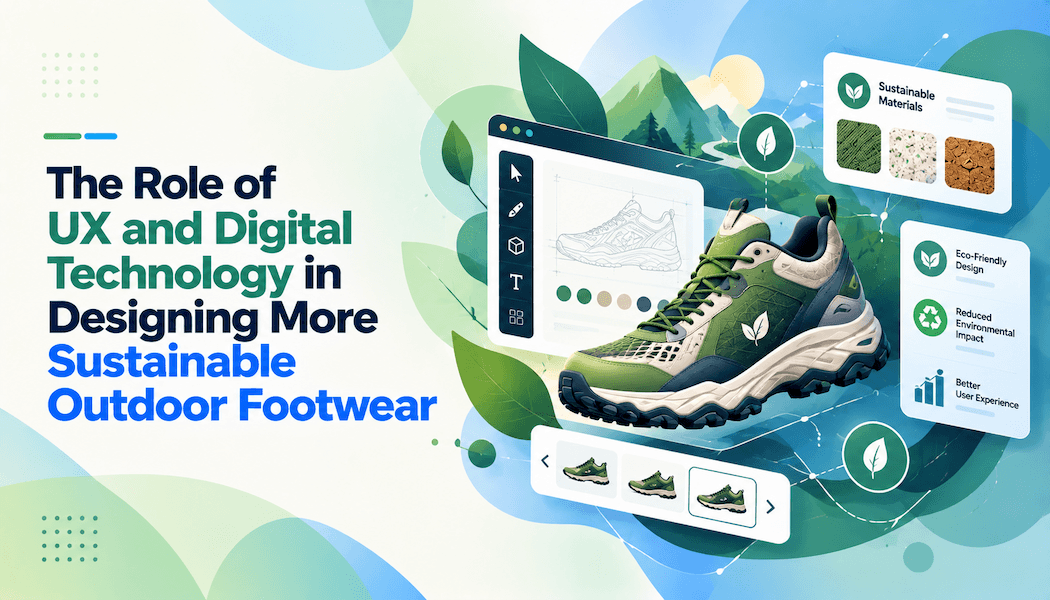
The Role of UX and Digital Technology in Designing More Sustainable Outdoor Footwear
In the modern era, designing footwear to be sustainable has emerged as a crucial factor. Shoes and boots are becoming more consumer friendly, with consumers now demanding greater comfort, strength, repair value and responsible manufacture. Meanwhile, footwear manufacturers are dealing with the complexities of product design, material selection, production processes, and product information. Digital technologies are helping brands to overcome these challenges and are providing improved designers' and consumers' experiences.
The biggest alteration is the incorporation of user experience (UX) principles into shoe design. Traditionally, UX has been associated with websites, applications, and digital interfaces. However, the same concepts can be applied here to physical products as it helps designers to understand how people interact with their products. For instance, outdoor footwear could be used as an example since there are various factors that would determine comfort, usability, durability, and performance that would impact the overall user experience.
Understanding the Outdoor User
Outdoor footwear requires to function in challenging environments. The same pair of shoes can be worn for hikers, runners, travelers and outdoor workers, as they will be used on various surfaces and in various weather conditions. The designers should thus comprehend the way consumers use footwear prior to choosing materials, methods and features.
Digital research tools can be used to gather and analyse customer feedback, product reviews, usage and performance data. This data can be used by the designer to recognize frequent issues like insufficient grip, fit issues, excess weight or wear issues of materials.
This is a user-centred approach that can also contribute to sustainability. Products are more likely to provide long term value when footwear is designed to meet real world needs. A comfortable and long lasting product that will last for years will not be replaced often.
Digital Technology and Sustainable Design
The world of digital design technology has revolutionized the way footwear companies create new products. Designers can design and edit digital models prior to making physical prototypes. This can minimize material and time consumption in the development process.
Teams can virtually test various shapes, materials, and building processes using computer-aided design, 3D modeling, simulation tools, and digital prototyping. Rather than creating several physical samples, designers can test a variety of options on the computer and choose the best one before entering into the manufacturing process.
This can help in the making of eco-friendly footwear. Businesses can make comparisons between materials and construction methods, as well as durability, weight, ability to be recycled, manufacturing etc.
Connecting Design and Product Data
Another important development is the use of Product Lifecycle Management (PLM) technology. The information associated with modern footwear products is of various types: such as design specifications, material, suppliers, manufacturing needs, test results, quality requirements, etc.
This information can be managed with a centralized digital system throughout the product lifecycle. PLM for outdoor footwear can offer a systematic approach to linking design choices with materials, production methods, and product performance for companies working with sustainable outdoor footwear.
It's important at this connection since sustainability is not only a matter of one design choice. Relying on numerous factors during the life of the product. Using a digital product management system will assist teams in keeping the information accurate and consistent, and in monitoring changes that occur as a product progresses through the concept to production process.
Improving Collaboration Through Digital Platforms
Several teams, including designers, engineers, product managers, manufacturers, suppliers, and marketing teams may be involved in outdoor footwear development. If communication is not effective, vital product information may end up dispersed throughout the organization.
Digital collaboration platforms can provide an environment for teams to collaborate on the same product information. Designers can easily change specs, engineers can check technical specs, and product managers can keep track of development.
This will increase the efficiency and help to avoid errors and re-work. It can also facilitate sustainable design projects to be more manageable as they can take into account environmental factors with other performance and commercial considerations.
Using Data to Improve Product Durability
Technology can help with sustainability, too, in terms of durability. Outdoor shoes should be able to endure the physical strain, temperature fluctuations, moisture and rough terrain of repeated use. Digital testing and simulation can be used to find out potential weaknesses, well before products hit the market.
For instance, virtual simulation can be used to test and consider how various materials or sole structures would react to repeated stress. These can help the designer develop more robust and effective designs.
The improvement in durability is a positive environmental effect. With longer-lasting shoes, consumers may not have to replace their shoes as often. This can help to decrease material usage and the environmental footprint of production and transport.
Creating Better Digital Experiences for Consumers
Technology can additionally boost the manner in which customers engage with footwear brands. On a website and/or mobile application, specific information about materials, product care, repair and sustainability can be available.
Interactive product pages can assist customers in comprehending the design of a certain pair of shoes and the materials employed. Digital tools can also offer sizing support, care instructions and offer guidance on how to extend product life.
These experiences enable consumers to connect with sustainability. Brands can leverage a digital experience to communicate what they are doing to make their product environmentally responsible, rather than just saying it is.
The Future of Sustainable Footwear Design
Wearable footwear will continue to blend with digital technology in the future. UX research can shed light on customers' requirements and digital design tools can speed up the development process and minimize the number of prototypes. Product lifecycle platforms can integrate data between departments and enable businesses to address growing and more complex sustainability demands.
With the emergence of new technologies, like artificial intelligence, 3D visualization, digital twins and advanced analytics, there will be even more ways for footwear designers to test concepts and make informed choices before the production process starts.
In short, sustainable footwear is more than just selecting eco-friendly materials. It's an approach to product design that is useful, durable, efficient, and responsible for the entire product life cycle. The fusion of UX thinking, digital product development, and digital product lifecycle management can help footwear companies make better products that better serve their users and better utilize their resources.