Top 7 Web Design Trends in 2026 That Are Winning Website Awards
Standing out in today’s digital world requires more than just clean graphics and functional code. Web design in 2026 is all about creating memorable, fast, and emotionally engaging user experiences.
If you are a web designer, agency, or site owner aiming to win a "Site of the Day" badge or rank on page one of Google, your website must embrace the latest digital design evolution.
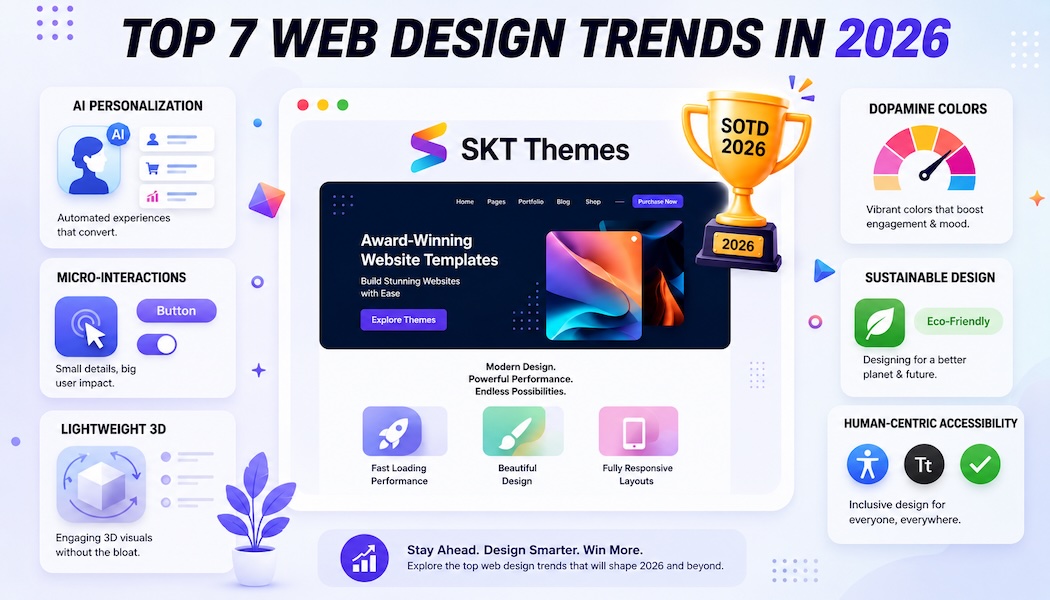
Below are the top seven web design trends dominating award platforms and search engine results pages (SERPs) in 2026.
1. AI-Powered Personalization & Dynamic Interfaces
Static layouts are slowly becoming a thing of the past. Modern websites now adapt in real-time based on how a user behaves, what time they visit, and what content they prefer.
- Intelligent Content Layouts: Websites can automatically shift calls-to-action (CTAs) and hero banners depending on whether a visitor is a first-time guest or a returning client.
- Smart Dark & Light Modes: Beyond manual toggles, sites now adjust contrast and lighting based on the user's ambient room light and screen preferences.
2. Micro-Interactions That Delight Users
Small animations are having a massive impact on user experience. Micro-interactions give immediate visual feedback when a user hovers, clicks, or scrolls across a webpage.
User Action ---> Subtle Animation ---> Instant Visual Feedback
(Hover/Click) (Button Pulse/Glow) (Drives Engagement)
- Purposeful Motion: Instead of flashy distractions, modern animations guide the user's eyes to important forms, product features, or menu buttons.
- Kinetic Typography: Text that subtly moves or changes scale as you scroll keeps readers focused and boosts average time-on-page.
3. Lightweight 3D Elements and Spatial Depth
3D visual elements used to slow down websites and destroy page load speeds. In 2026, advances in WebGL and lightweight browser rendering allow 3D objects to run smoothly even on mobile devices.
- Interactive Product Previews: Users can rotate, zoom, and inspect products in 3D before making a purchase.
- Layered Depth (Glassmorphism & Shadows): Soft gradients, multi-layered cards, and transparent blurred backgrounds make flat screens feel tactile and modern.
4. Performance-First Design (Core Web Vitals)
Search engines like Google penalize websites that look beautiful but take forever to load. Today's award-winning sites prioritize speed and a clean technical foundation. Utilizing lightweight frameworks, such as fast-loading SKT Themes, ensures your design scores high on Core Web Vitals while maintaining rich visual appeal.
Design Element Traditional Approach 2026 Standard
| Design Element | Traditional Approach | 2026 Standard |
| Images & Video | Heavy PNGs / MP4s | Next-gen AVIF, WebM & Lazy Loading |
| Fonts | Multiple External Fonts | Variable Fonts (1 file for all weights) |
| Code Structure | Uncompressed Scripts | Streamlined Frameworks & Server-side Rendering |
5. Dopamine Color Palettes & High-Contrast Visuals
Vibrant, high-energy color schemes are replacing minimalist black-and-white layouts. Known as "dopamine color palettes," these bright, expressive hues spark joy and instantly grab attention.
- Strategic Contrast: Designers use bold colors against neutral backgrounds to highlight conversion points, like "Buy Now" or "Submit Inquiry" buttons.
- Gradients with Texture: Soft Gaussian blurs and grainy background textures add warmth and personality to corporate websites.
If you're looking to jumpstart a project with vibrant layout presets, exploring pre-designed marketing WordPress templates can give you a major design head start without building from scratch.
6. Sustainable & Eco-Friendly Web Design
Digital carbon footprints are becoming a priority for global businesses. Clean, optimized web design directly reduces energy consumption on servers and mobile devices.
- Leaner Code Payloads: Removing unused JavaScript and CSS files cuts down server processing energy.
- Dark Mode Preference: Offering dark mode by default saves battery life on OLED and AMOLED mobile screens.
7. Human-Centric Accessibility (Inclusive UX)
An award-winning website must be accessible to everyone, including users with visual, motor, or cognitive impairments.
- Color Contrast Ratios: Ensuring text stands out clearly against all background colors.
- Keyboard Navigation: Designing site menus and interactive forms so they can be navigated using only keyboard controls.
- Readable Screen-Reader Content: Adding descriptive alt text and clear semantic HTML tags to all media elements.
Building an accessible site is far easier when starting with pre-tested design WordPress themes that already follow mobile-friendly and cross-browser coding standards.
Key Takeaways for Web Designers and Developers
To build a website that wins awards and ranks #1 on Google in 2026, follow these quick rules:
- Prioritize Speed: Keep page load times under 2 seconds.
- Engage with Purpose: Use 3D elements and micro-interactions to guide—not distract.
- Design for Everyone: Ensure your site complies with global accessibility standards.
- Tell a Visual Story: Combine custom visuals and bold colors to stand out from generic layouts.